

Pour yourself a glass, settle in, and consider this: the drink in your hand has been around longer than the printing press. Whisky isn’t just a spirit; it’s a ritual, a conversation starter, and for millions of people around the world, a deeply personal pleasure. But behind every carefully chosen bottle lies a story that’s as rich and layered as the liquid itself.
The Ancient Origins of Whisky
The history of whisky stretches back over a thousand years, with the earliest known distillation practices traced to ancient Mesopotamia and later perfected by Arab alchemists in the Middle Ages. Knowledge of distillation travelled through Europe via trade routes, eventually reaching the monasteries of Ireland and Scotland by the 11th and 12th centuries. Monks, distilling fermented grain mash to produce aqua vitae – “water of life” – were the unlikely fathers of what would become a global obsession.

Scotland, Ireland and the First Written Records
The earliest written record of whisky production in the British Isles appears in Scotland in 1494, when an entry in the Exchequer Rolls notes malt being sent to Friar John Cor “wherewith to make aquavitae.”
Ireland makes a competing claim, with traditions suggesting distillation there predates even this. Regardless of who goes first, both nations shaped whisky into the drink we recognise today – Scotland refining a smoky, malt-forward character; Ireland leaning toward smoother, triple-distilled expressions.
Read about the difference between Whiskey and Whisky
Taxes, Smuggling and the Birth of Scotch Whisky Culture
The history of whisky took a rebellious turn in 1644 when the Scottish Parliament imposed the first excise tax on spirits. Overnight, hundreds of illicit stills appeared across the highlands and islands, and whisky smuggling became a cottage industry. This golden age of illegal distillation lasted nearly two centuries, producing the outlaw romanticism still woven into Scotch whisky’s identity. The Excise Act of 1823 finally brought order, legalising and regulating distilleries and laying the foundation for the modern Scotch industry.
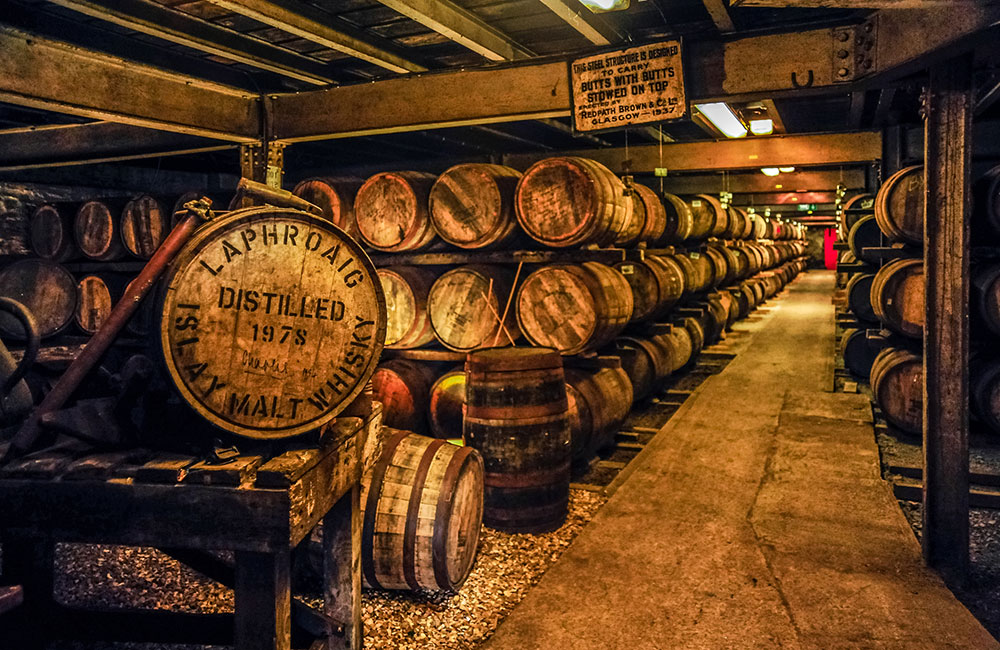
What is a Dram?
A dram is simply a small measure of whisky — in everyday use it just means “a glass” or “a pour” of whisky, without referring to any specific quantity. It’s a warm, informal Scottish term that carries a sense of conviviality and tradition, which is why it’s so widely used in whisky culture and writing.
Technically, a dram was originally a unit of apothecary measurement equal to 1/8 of an ounce (about 3.7ml) — but in practice, nobody is being that precise. Ask someone in a Scottish pub if they’d like a dram and they’ll expect something closer to a standard 25–35ml measure.
Whisky Goes Global

The 19th century saw Scottish and Irish emigrants carry distilling knowledge to North America, giving rise to bourbon in Kentucky and rye whisky in Pennsylvania. Japan entered the story in 1923, when Masataka Taketsuru – trained in Scotland – founded what would become Nikka Whisky, launching a tradition now considered among the finest in the world. Today, whisky is produced on every continent, with India, Taiwan, and Australia all producing internationally acclaimed expressions.
Why the History of Whisky Still Matters
Understanding the history of whisky transforms every dram into something richer. Each bottle is a thread connecting you to medieval monasteries, highland smugglers, and generations of distillers who guarded their craft jealously. Whether you prefer a peated Islay single malt, a smooth Irish blend, or a small-batch American bourbon, you’re drinking from a tradition that has weathered centuries — and only gotten better with age.


