
Scientists from every single inhabited continent agree that ocean biodiversity is under threat, but there is still reason for optimism if we act now to save it for the future, according to a new survey carried out by the Marine Stewardship Council (MSC) this World Ocean Month.
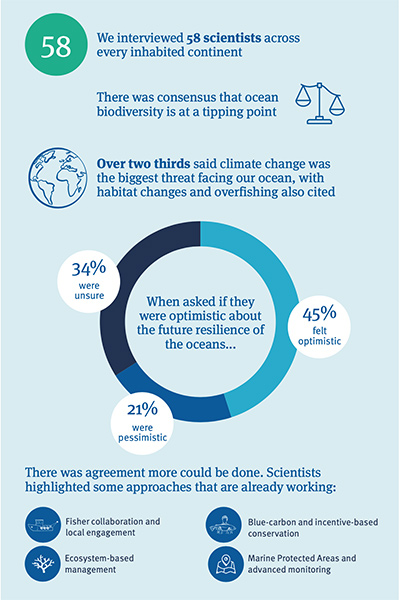
The online survey consisted of seven questions and was shared with marine scientists around the world, asking them about the threats and opportunities facing ocean health and biodiversity. It was completed throughout March 2025 by 58 people.
Findings analysed by global insights and advisory consultancy GlobeScan showed that over two-thirds of the almost 60 leading ocean experts consulted thought climate change was the greatest threat to ocean health and biodiversity, but overfishing and changes to habitats also ranked highly in terms of their impact.
Did you know?
- 38% of the world’s fish stocks are overfished.
- Consumption of aquatic animals has risen from 9.1kg per capita in 1961 to 20.7kg in 2022 (State of World Fisheries and Aquaculture Report).
- Extinction rates are currently 100 to 1,000 times higher than the natural baseline rate, a trend that is accelerating (Dasgupta Review, 2021).
- Research shows wild-caught fish populations targeted by MSC-certified fisheries have a higher relative abundance than non-MSC populations.
Despite looming concerns regarding threats facing the ocean, almost half (45%) were optimistic, pointing to advances in science and policy as reasons to be hopeful for positive progress in protecting the oceans.
Scientists from countries ranging from the Solomon Islands to South Africa cited examples of global treaties and commitments, as well as positive case studies of ocean restoration projects, as ways in which ocean biodiversity could be protected from future harm. However, respondents emphasised that international policies, treaties and governance frameworks needed to go faster and further in their efforts to maintain a healthy ocean for future generations.
Survey respondent Dr. Judy Mann-Lang of the Two Oceans Aquarium Foundation, Cape Town, echoes the need for action: “The ocean is remarkably resilient – if we just give it a chance. But this will need a change in what most people value. So, to save the ocean (and ourselves), we need to change society, and that will take everyone to work together.”

The upcoming United Nations Ocean Conference in Nice, France, is expected to act as a catalyst for states to sign up to the Agreement on Marine Biodiversity of Areas Beyond National Jurisdiction – also known as the ‘BBNJ’ or ‘High Seas Treaty’. At least 60 states must sign the treaty, which aims to conserve and sustainably use marine biodiversity in areas beyond national jurisdiction, before it enters into force.
Preserving Ocean Life
Ahead of World Oceans Day, the MSC released a report titled Preserving ocean life: How sustainable fishing supports biodiversity. The report showcases a selection of positive case studies where fishers are using technology, tools and different techniques to minimise their impact on ocean biodiversity and protect marine life for future generations.
Peter Thomson, the United Nations Secretary-General’s Special Envoy for the Ocean, and author of the report foreword, said: “We know that sustainable fisheries operate best when we synergise the positive actions of governments, industries, local communities and international organisations.”
“These inspiring stories show that biodiversity protection and sustainable seafood production are two sides of the same coin.”
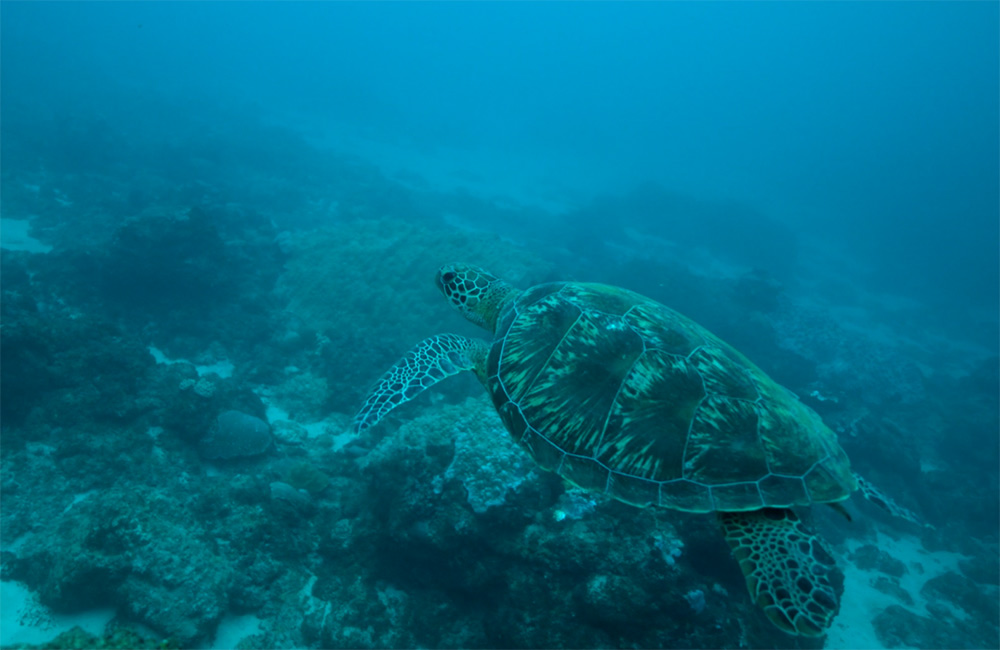
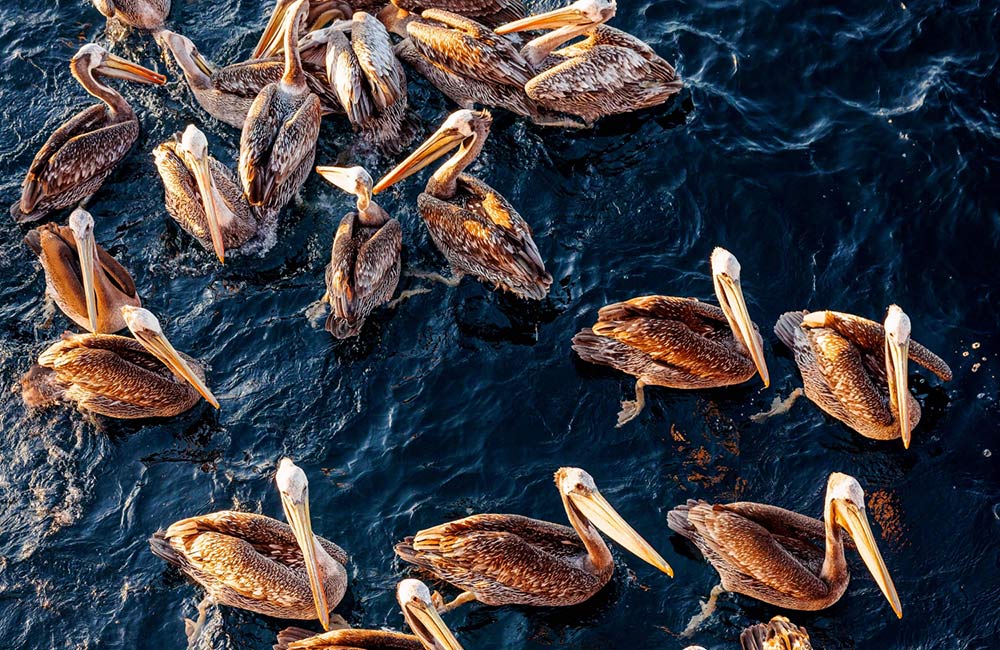
Featuring fisheries across the globe, the report spotlights positive innovative changes they have made to protect endangered and threatened species, including seabirds in South Africa, turtles in the Indian Ocean, sharks in the Eastern Pacific and porpoises in the Celtic Sea.
Dr. Beth Polidoro, Research Director at the Marine Stewardship Council, said: “There is a general consensus from scientists across the world that our oceans are under threat from human impact, whether that is through overfishing or the ongoing threat of climate change.”
“What is positive is that we are still in a place to change the trajectory, halt these negative impacts and ensure healthy oceans full of life for future generations.”
“This new report demonstrates how sustainable fisheries are doing just that – fishing to feed people and provide the essential proteins for communities around the world whilst respecting and protecting the biodiversity of the vibrant ecosystems they operate in.”
“Fisheries already demonstrating this commitment must be supported, and governments need to provide an enabling environment, so that positive progress can be accelerated globally.”
To highlight the role that sustainable fishing practices play in preserving ocean health, the global ocean not-for-profit, Marine Stewardship Council (MSC), is running a global, public awareness campaign with message: “Sustainable fishing means more” – that is, more fish and life in the ocean for future generations to benefit from.
Read the full report here. For more information, visit msc.org.


