

From olive groves in southern Europe to spice markets in North Africa, Mediterranean food is more than a cuisine – it’s a way of life shaped by geography, trade and centuries of cultural exchange. For South Africans who appreciate fresh produce, outdoor dining and bold flavour, the Mediterranean table feels both exotic and surprisingly familiar.
What Region Does Mediterranean Food Cover?
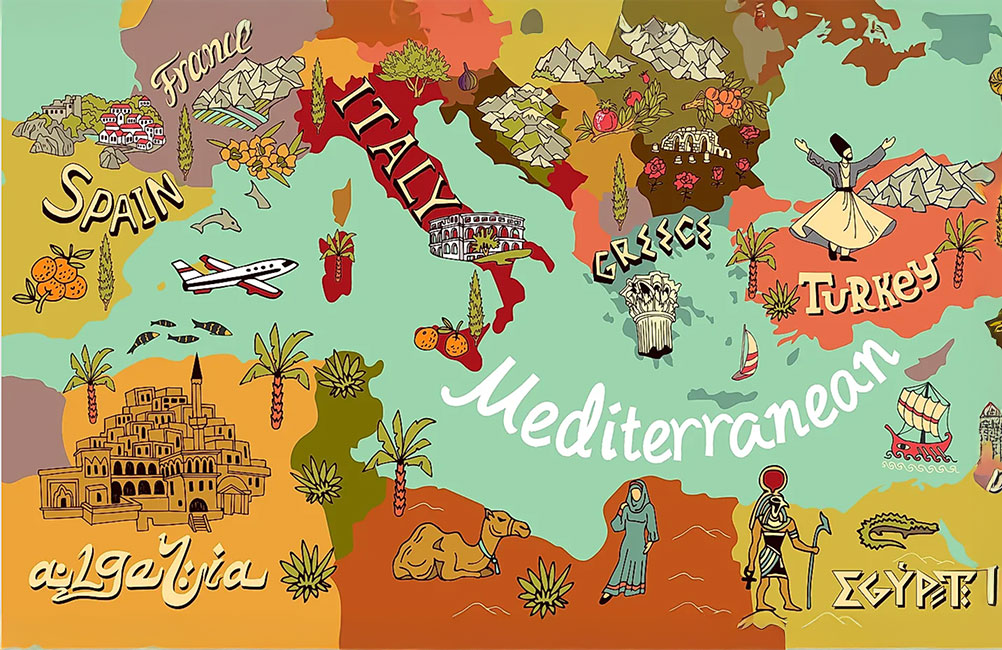
The Mediterranean region surrounds the Mediterranean Sea, spanning three continents: Europe, Africa and Asia. Countries typically associated with Mediterranean food include Spain, Italy, Greece, southern France, Turkey, Lebanon, Israel, Morocco, Tunisia and parts of Egypt.
Despite cultural differences, these regions share a similar climate – hot, dry summers and mild winters – which has heavily influenced Mediterranean food. Olive trees thrive here, vineyards flourish and an abundance of vegetables, legumes and grains form the backbone of daily meals.
A Culinary History Shaped by Trade
Mediterranean food has deep historical roots. Ancient civilisations such as the Greeks and Romans established the “Mediterranean triad”: olives, wheat and grapes. Olive oil became the primary cooking fat, bread the daily staple, and wine the drink of choice.

Centuries of trade across the sea introduced spices from the Middle East, tomatoes from the Americas and techniques from North Africa. The Ottoman Empire, Moorish rule in Spain and maritime trade routes all left their mark. This blending of cultures is what gives Mediterranean food its layered, complex character.
Iconic Mediterranean Dishes
Each country offers its own expression of Mediterranean food:
Spain is known for paella, tapas and seafood-rich dishes from its long coastline.
Italy celebrates pasta, risotto, tomatoes, basil and generous glugs of olive oil.


Greece brings us moussaka, souvlaki and fresh salads topped with feta and olives.
Morocco contributes fragrant tagines layered with spices, dried fruit and slow-cooked meats.


Across Lebanon and Israel, mezze spreads feature hummus, falafel, grilled vegetables and flatbreads.
While flavours differ, Mediterranean food consistently emphasises freshness, seasonality and balance. Meals are often built around vegetables, beans, lentils and whole grains, with meat used more as a flavouring than the main focus.
The Mediterranean Lifestyle
One reason Mediterranean food remains globally popular is its connection to lifestyle. Meals are leisurely and social. Ingredients are minimally processed. Herbs like oregano, rosemary and thyme add fragrance without heaviness. Seafood is common along the coast, while inland regions rely more on lamb, goat and pulses.
For South Africans, Mediterranean food resonates with our love of braais, shared platters and vibrant produce. With our own excellent olive oils, wines and fresh vegetables, it’s easy to recreate Mediterranean-inspired dishes at home.

Why Mediterranean Food Endures
Today, Mediterranean food is celebrated not only for flavour but also for its balance and simplicity. It’s colourful, generous and deeply rooted in history. From a rustic Italian pasta to a North African tagine, each dish tells a story of migration, climate and community.
At its heart, Mediterranean food is about gathering around the table, sharing what’s seasonal and savouring each bite – a philosophy that feels perfectly at home anywhere in the world.
Inspired? Try these Mediterranean dishes and find your favourites.


