
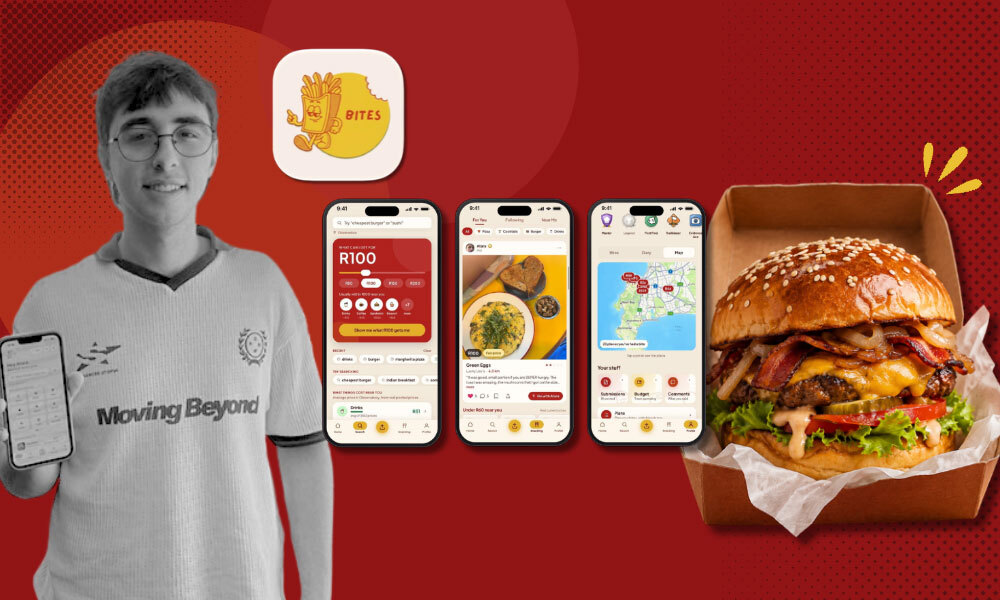
Eating out shouldn’t break the bank, which is exactly why Dylan Steiner created Bites – Price Comparison. The first-year business science student from the University of Cape Town (UCT), who hails from Johannesburg, is on a mission to make sure that broke students and savvy locals find the best food prices with the help of his app, Bites. Through price comparisons, the app allows foodies to dine on a budget and discover affordable restaurant offerings in their area. We chat with the young entrepreneur about the inspiration behind Bites and how locals can take advantage of the app, as food costs continue to rise. Join the chat.
What sparked the idea for Bites?
It’s actually quite a funny story. I was walking to Nando’s with my friend Gabriel, and I got a half chicken and chips. It was one hundred and thirty rand, which is an insane price.
A few days later, we walked down the same street, and by chance, we discovered a chicken restaurant across the road from Nando’s. I got the same meal for seventy-nine rand. Afterwards, I thought about how there’s been a restaurant across the street selling the exact same thing for less all this time. From there, I got this idea to create an app and build a social media community where people can share restaurant recommendations and upload price ranges, so locals won’t have to buy overpriced food.
Why do you think price transparency is so important in today’s economical climate?
First and foremost, things have become expensive. Cape Town (and South Africa) is becoming increasingly unaffordable for locals. Eating out shouldn’t be a privilege reserved for rich people. Restaurants that cater to people who can’t afford as much should be seen online, known by locals and made accessible to them.
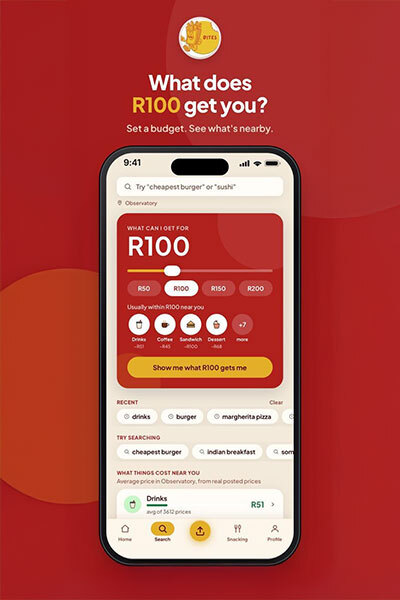
Secondly, a lot of times, restaurants that don’t have an advertising budget or online presence become invisible, and people don’t know they exist. Having transparency through pricing is a great way to generate business for smaller restaurants while making them more competitive. If there’s a restaurant charging less for the same menu item than another (more expensive) restaurant, the more affordable one should get more business (in theory). I wanted to make that as clear as possible; that’s why the app prioritises prices.
Did you have any challenges designing the app?
There were all the usual challenges: how do I create an app? Where do I start? How do I do it? But with all the resources we have today, it was pretty simple. Don’t get me wrong, it took a lot of hard work, but there wasn’t anything that couldn’t be solved with the help of modern technology and effort.
The most difficult challenge I had was balancing university with finding time to work on the app. All I wanted to do every day, for hours, was work on it, and it kind of became a struggle to pull back and focus on my studies as well.
How do you see the app impacting Cape Town’s current eat-out culture?
The app has just launched in Cape Town, but the plan is for it to go global very soon.
Because it’s a community-based app, people post their own feedback. I think people are more likely to post genuinely good feedback on restaurants that focus on creating a good culture, good vibes and good food at affordable prices, which gives them free exposure.
I feel that Capetonians keep going to the same overpriced places because that’s just where most locals go. (Where else are you gonna go? No one knows!) That and there are just too many restaurants to keep track of (the irony). What Bites does is encourage locals to discover newer, different and possibly better restaurants, allowing them to flourish. I hope that will not just change the Cape Town food scene but reach restaurants across South Africa, too.
The app relies on user-generated content. How do you encourage users to share experiences?
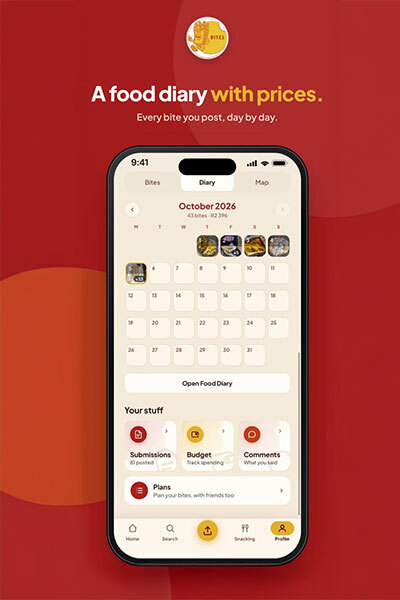
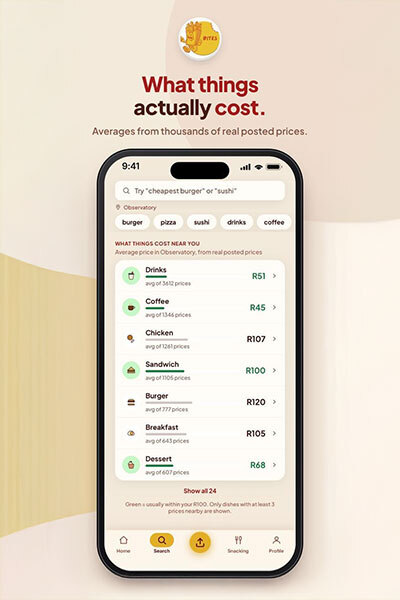
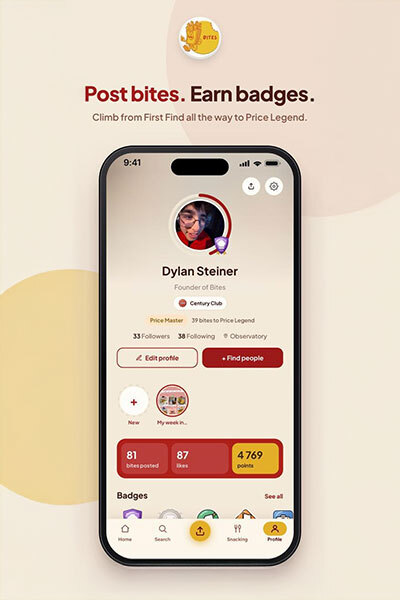
Well, there are a few things. If many people post about the same product, the app averages the price and removes any outliers, so people can’t lie about pricing. To encourage users to post prices, there’s the social media aspect. App users can follow each other’s postings. You also get points and rewards for posting on the app, which is an awesome incentive. The main aspect we count on to ensure accuracy is that restaurants sign up and register with the app. Because they can control their menu and pricing, thus ensuring that everything is current and accurate.
When I started Bites, I didn’t have any data input, so I had to personally visit eight hundred restaurants and upload their menus to the app to ensure the prices listed were accurate. The long-term plan is to get more restaurants and users to upload their prices.
How does Bites help users find meals that are cheaper and offer value for money?
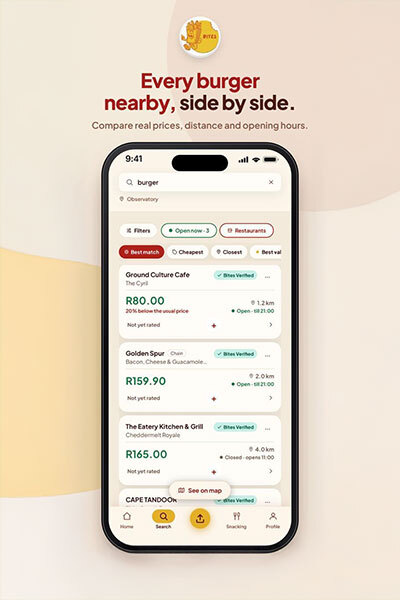
When users upload their meals, they not only upload pictures but also reviews through our star-rating feature. This mechanism helps establish genuine value.
From a price point of view, you can compare prices with other restaurants in the area, and most importantly, you can read customer reviews. So, if something seems like a good deal, you click on the restaurant to see if the ratings match. If it has a one-star rating, poor reviews and disappointing food pics, customers can make an informed decision from there.
How have the reviews since the launch been?
The launch has been incredible! I mean, the app only launched six weeks ago*, and we already have three thousand users*, which is outstanding for a brand-new, completely independent app. Bites is not a company or anything (yet), so this has been awesome.
Sure, there have been a few bugs here and there, but the great thing is that users can send feedback and issues can be fixed. With the interactive nature of the app, users can share what they would like to see, which I try to incorporate. Obviously, you can’t take all the feedback, but some people have provided genuinely good feedback. And we have many good long-term plans. But so far, the launch has been absolutely fantastic.
Bites is free to use. How do you plan to grow the app while keeping it accessible to users?
The app will always be free for users. The idea is to make it as accessible as possible for everyone, so users don’t have to worry about subscription charges. It’s a hundred percent free!
Eventually, restaurants will be able to opt in for a subscription model, potentially allowing them to have a verified profile, where they could gain analytics on the pricing of their food, insight into how they could increase sales, create campaigns to let people know when they have deals, etc. But for now, the idea is to make it as accessible as possible to everyone, including restaurants.
How can people download the app?
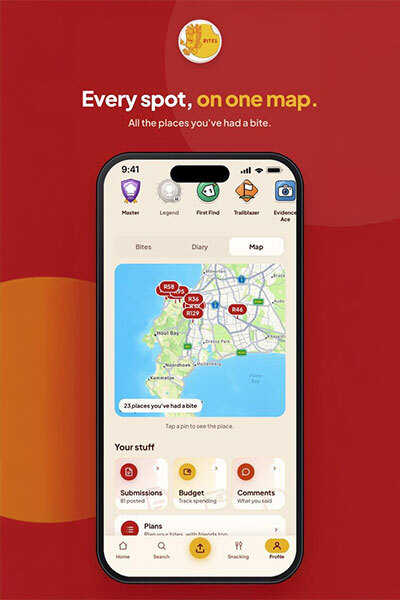
People can download Bites on the App Store or the Google Play Store. Just search ‘Bites – Price Compare’, and you’ll see an awesome little yellow chip icon with eyes, with the name ‘Bites’. It’s Android- and iOS-compatible, and is available for download today.
Favourite place to eat out in Cape Town?
My favourite is Krispy King, mostly because of the chicken paella. It’s cheap, great value for money, and it tastes really good, too.
Any big plans for Bites?
Yes! Bites is tapping into the Joburg food scene. The restaurants are not as expensive compared to Cape Town establishments, but Jozi users are already uploading to the app.
Besides South Africa, I hope Bites will take off in major cities like London, Barcelona, New York and big food centres around the world. If you want to get your community going, you can start uploading prices and take advantage of great deals in your city, no matter where you are.
Advice for young entrepreneurs?
Everyone has lots of great ideas, but as the saying goes, the hardest thing to do is actually start. It’s not the idea itself.
We live in an age where most people have access to technology, so starting a business is easier than you think. You just need to have the will to do it. So, take advantage of the technology you’ve got access to and just make it happen.
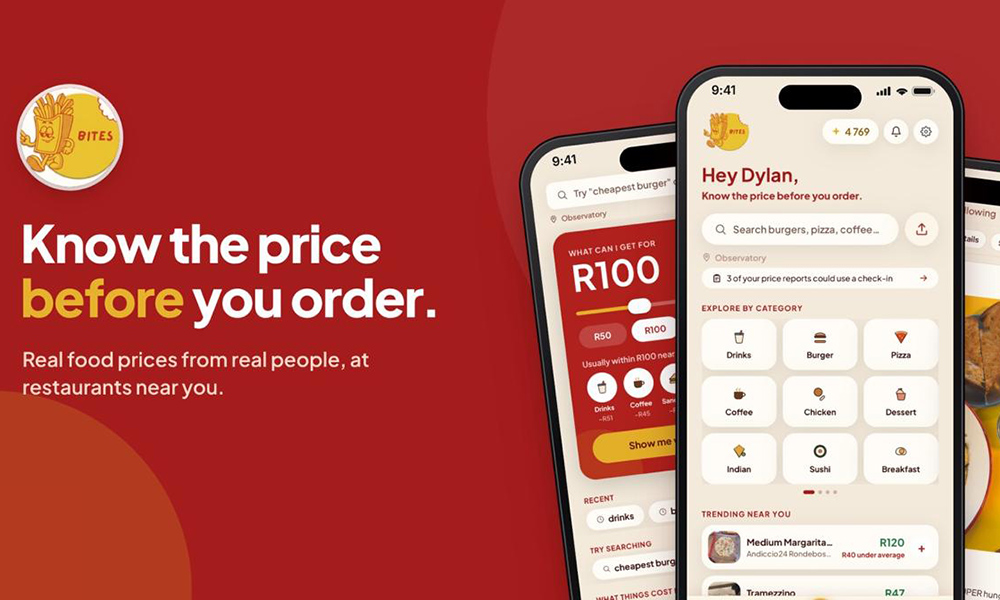
Bites – Price Compare is available for free download on the App Store and Google Play Store. To get the best meal deals, follow @bites.price compare on Instagram.
*All stats provided were accurate at the time of publication.


