

Whipped cream seems simple until you need it to perform. A casual dessert at home may only require a bowl, a whisk, and a few minutes of effort. A busy café, bakery, catering business, or enthusiastic home cook may have very different expectations. Texture, speed, consistency, ingredient control, storage, and cleanup can all influence which method makes the most sense.
Cream chargers are one option, but they are not automatically the right answer for every kitchen. Manual whisking, electric mixers, ready-made aerosol cream, and whipped cream dispensers each offer distinct advantages. The best choice depends less on finding a universally superior method and more on understanding how often you make whipped cream, how much you need, and what kind of result you expect.
Understanding What Each Method Actually Does
Traditional whisking incorporates air into cold cream through physical agitation. It is the most straightforward method because it requires very little specialised equipment. A balloon whisk and a chilled bowl can produce excellent whipped cream, particularly when making a small quantity. The trade-off is time and effort. Whisking by hand can also make it harder to achieve the same texture repeatedly, especially when different people are preparing the cream.
Electric hand mixers and stand mixers speed up the process considerably. They are practical for larger batches and give the user more control over soft, medium, or stiff peaks. However, they can be inconvenient when only a small amount of cream is needed. Bowls, beaters, and attachments also need to be cleaned afterwards, and overwhipping can quickly turn a good batch of cream grainy or buttery.
Cream chargers work differently because food-grade nitrous oxide is used with a compatible cream dispenser to aerate the cream under pressure. When dispensed, the pressure change creates a light, whipped texture. Industry guidance and equipment manuals consistently emphasise that the cream, the dispenser, the correct amount of gas, and proper handling all contribute to the final result. In other words, a charger is part of a system rather than a magic shortcut that guarantees perfect cream.
Where Cream Chargers Make the Most Sense
The strongest advantage of a cream-charger setup is consistency. Once a recipe and technique are established, a dispenser can produce a similar texture from serving to serving. This can be particularly valuable in cafés, restaurants, bakeries, and catering environments where presentation matters and several portions may need to be prepared over the course of a service.
Speed is another important consideration. A dispenser can make it easier to prepare whipped cream without repeatedly setting up a mixer or manually whisking a bowl. For someone serving desserts, hot drinks, waffles, pancakes, or other dishes that need a finishing touch, that convenience can make the workflow noticeably smoother. The ability to prepare flavoured creams and culinary foams can also appeal to cooks who want more flexibility than a standard bowl-and-whisk method offers.
Access and availability may matter as well, particularly for people who use chargers regularly. Instead of making a special trip to a kitchen supplier, some Melbourne users may prefer this Melbourne delivery service when planning around ingredient preparation and kitchen supplies. The important point is not simply getting a charger quickly, but choosing a reliable food-grade product and a compatible dispenser suited to the intended culinary use.
When a Whisk or Electric Mixer Is the Better Choice
For occasional home baking, a cream charger may be more equipment than necessary. If someone only makes whipped cream a few times each year, a whisk or electric mixer can be the simpler and more economical option. There is no additional dispenser system to maintain, and the basic process is familiar to most home cooks.
An electric mixer is particularly useful when making a large bowl of whipped cream for a cake, trifle, or family gathering. It can handle substantial quantities efficiently, and the texture can be adjusted while mixing. This direct visual control is useful for recipes where the cream needs to be folded into another ingredient or stopped at a very specific stage.
Manual methods can also offer a more hands-on experience. Some cooks simply prefer seeing the cream change gradually and deciding exactly when to stop. While this approach requires more effort, it provides a straightforward connection between the preparation process and the finished result. For small quantities, that simplicity can outweigh the convenience of specialised equipment.
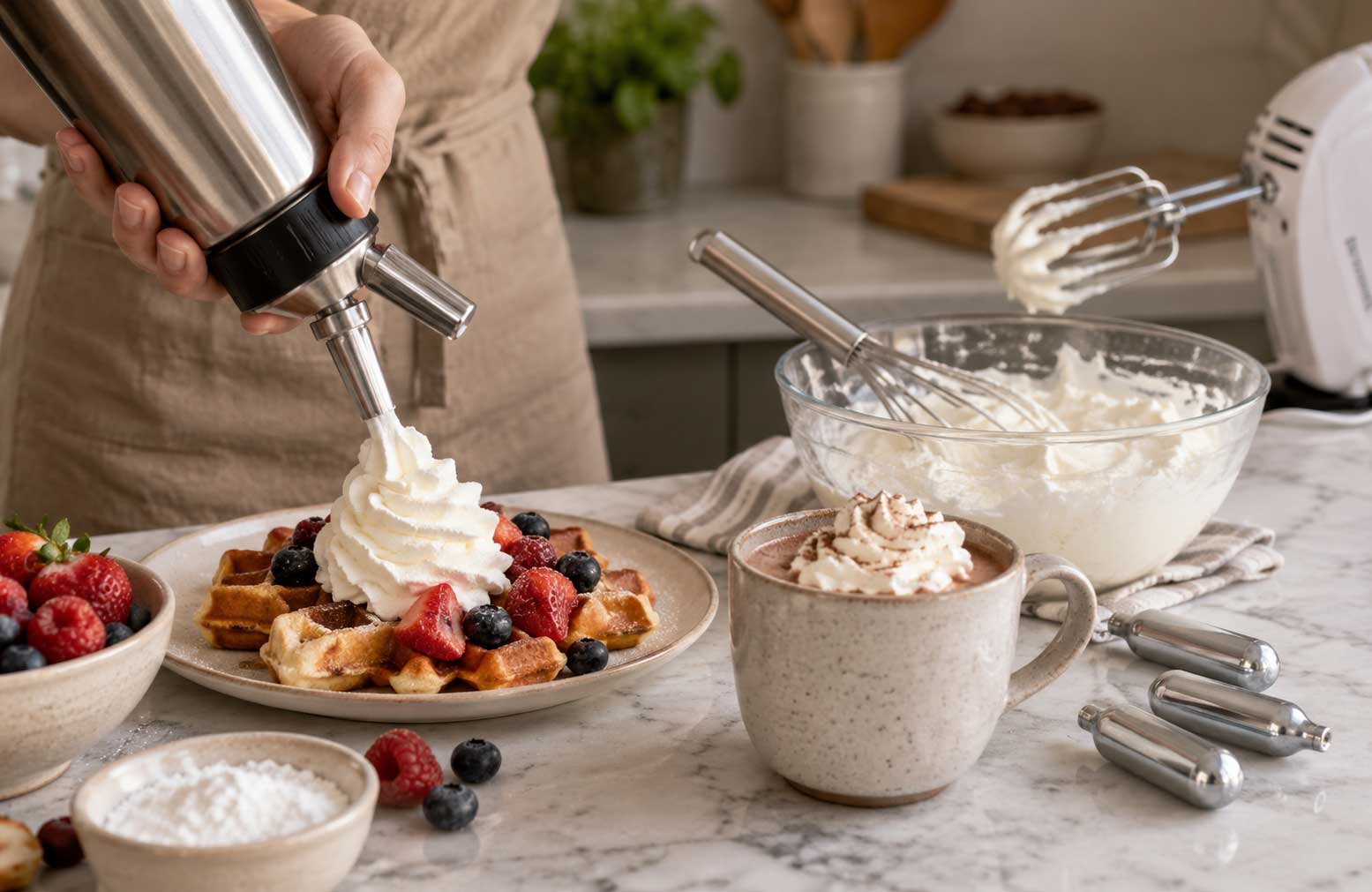
How Ready-Made Aerosol Cream Compares
Ready-made aerosol whipped cream is arguably the most convenient option of all. It is already prepared, requires no mixing, and can be dispensed directly onto food or drinks. For an occasional dessert topping, that level of convenience is difficult to beat. There is no bowl to wash and no recipe to prepare.
The limitation is control. With a ready-made product, the user generally accepts the formulation chosen by the manufacturer. The sweetness, flavour, richness, and ingredients are already determined. That can be perfectly acceptable for many situations, but it offers less flexibility for someone who wants to use a particular cream, reduce sweetness, add vanilla, or create a customised flavour.
Aerosol cream can also be less practical for culinary applications that require a specific texture or a larger volume of freshly prepared product. A reusable dispenser gives the cook more influence over what goes into the cream and how it fits into a recipe. The choice therefore comes down to whether maximum convenience or greater ingredient control is the higher priority.
Comparing Cost Beyond the Initial Purchase
Cost comparisons can be misleading when only the initial price is considered. A whisk is inexpensive, while an electric mixer and a cream dispenser require a larger upfront investment. Cream chargers also involve an ongoing supply cost. However, the value of a method depends on how often it is used.
For a person making one small batch of whipped cream for a birthday cake, buying specialised equipment may not be economical. For someone producing whipped cream several times each week, the calculation changes. Time saved, consistency, reduced preparation effort, and the ability to dispense portions as needed can all have practical value.
Commercial kitchens should also consider labour and workflow rather than looking only at the price of individual ingredients or supplies. A method that takes longer to prepare and clean may be less attractive during a busy service, even if the equipment itself is inexpensive. Conversely, a more specialised system may not justify its cost if it is rarely used. The most sensible choice is the one that matches actual usage rather than an idealised version of how the kitchen might operate.
Texture, Freshness, and Control Matter
Different methods can create different experiences. Whisking and mixing allow cooks to watch the cream closely and stop at exactly the desired stage. This makes them useful when a recipe calls for soft peaks for folding, firmer peaks for decorating, or another precise consistency.
A dispenser powered by a cream charger can create a light, aerated texture that is especially useful for direct dispensing and presentation. It can also make portioning easier, helping create a more uniform appearance across multiple servings. For professional food preparation, that repeatability can be an important practical advantage.
Freshness is another reason some cooks prefer preparing their own whipped cream rather than relying entirely on ready-made products. Using fresh ingredients allows control over flavour and sweetness. Whether the cream is prepared with a mixer or a compatible dispenser, the quality of the ingredients and proper food handling remain central to the final result. Equipment can improve convenience, but it cannot compensate for poor-quality cream or improper storage.
Choosing the Method That Fits Your Kitchen
There is no need to treat this as a competition with one permanent winner. A hand whisk makes sense for small, occasional tasks. An electric mixer is a dependable choice for larger batches and recipe-driven baking. Ready-made aerosol cream is useful when speed and convenience are the only priorities.
Cream chargers and compatible dispensers make the most sense when consistency, efficient serving, ingredient control, and repeated use are important. They can be particularly useful for regular home cooks and professional kitchens that want a practical way to prepare and dispense fresh whipped cream without repeatedly mixing individual batches.
The best decision starts with an honest assessment of how you actually cook. Consider how much whipped cream you make, how often you make it, the textures you prefer, and whether speed during service matters. When those questions are clear, the choice becomes much easier.
Conclusion
Whipped cream does not need to be complicated, but the method behind it can make a meaningful difference to convenience and results. A whisk, mixer, aerosol can, or cream-charger system can all have a legitimate place in the kitchen. The right option depends on the task rather than on which method appears most advanced.
For occasional use, simplicity may be all that is needed. For frequent preparation, greater consistency and efficiency can justify more specialised equipment. By matching the method to your cooking habits, volume, and desired level of control, you can choose a whipped-cream approach that feels practical, reliable, and genuinely useful every time you need it.


