

Few foods divide opinion quite like yeast extract – you either love it or hate it. Its dark, glossy sheen and savoury punch have become part of breakfast folklore in Britain, Australia and beyond. But behind every jar of Marmite, Bovril or Vegemite lies a surprisingly rich story of chemistry, war, invention and national pride. What began as industrial waste went on to become one of the world’s most iconic and controversial spreads.
From Brewer’s Waste to Breakfast Gold
It looks like molasses yet tastes savoury, but what exactly is this age-old paste made of? Yeast extract is quite literally the concentrated remains of yeast cells – usually a by-product of brewing. Once the yeast has done its work fermenting beer, it’s heated and broken down in a process called autolysis, which allows the cell’s own enzymes to digest themselves. The result? A dark, salty paste bursting with glutamates and B vitamins – essentially, umami in a jar.
Marmite quickly became known as a health food, prized for its B-vitamin content at a time when malnutrition was widespread.
German chemist Justus von Liebig decided to turn the yeast sediment into something edible in the mid-19th century. A pioneer in food science, Liebig was fascinated by how to extract maximum nutrition from limited resources. His experiments with concentrated yeast laid the foundation for later inventions that would change how the world thought about nutrition and food preservation.
The Power of Beef and the Birth of Bovril
But before Marmite ever hit shelves, beefy spreads like Fray Bentos and Bovril had long been ‘making waves’ – the latter being more popular on South African shelves.
Bovril’s story begins with Scottish entrepreneur John Lawson Johnston, who developed a concentrated beef extract in the 1870s. The concept was born out of war – specifically, Napoleon III’s need to supply French troops with nutritious rations during the Franco-Prussian War. Meat was difficult to transport and preserving freshness was a challenge, so what was then called Johnston’s ‘liquid beef’ offered a compact, shelf-stable solution.
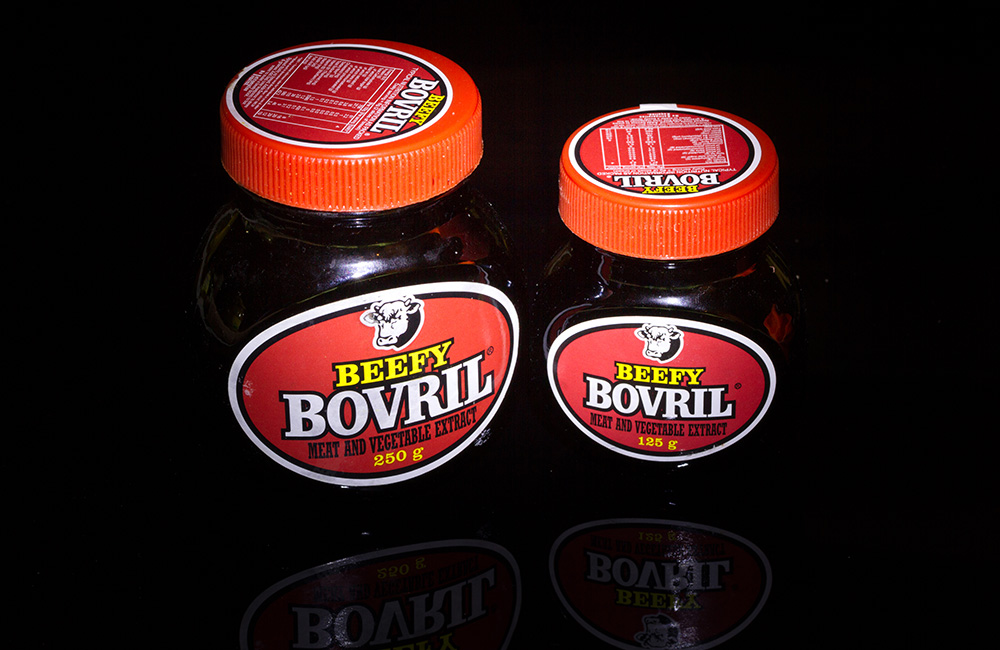
Johnston later renamed the product Bovril – from ‘bos’ (Latin for ox) and ‘vril’, a term borrowed from the sci-fi novel The Coming Race, where ‘vril’ was a fictional reference representing an energy-giving life force. The name promised strength in every spoonful, and soon Bovril became a staple of British households and soldiers alike. By the early 20th century, people were drinking it diluted with hot water or spreading it thickly on bread. Its invention also paved the way for products like OXO cubes, which became popular in the 1910s.
When Unilever acquired Bovril decades later, around the 1990s, consumers feared contracting Creutzfeldt-Jakob disease – the human form of bovine spongiform encephalopathy (BSE), commonly known as ‘mad cow disease’ – which led to dwindling sales. To calm fears about beef-based products, Unilever introduced a vegetarian version made from yeast extract. However, purists were unimpressed, and once the beef ban was lifted, the original version quickly returned to shelves.
Bovril’s reach extended far beyond Britain – particularly to South Africa, where it became a household name and a comforting part of local food culture, whether stirred into stews or smeared on morning toast across the country.
The Great Yeast Divide
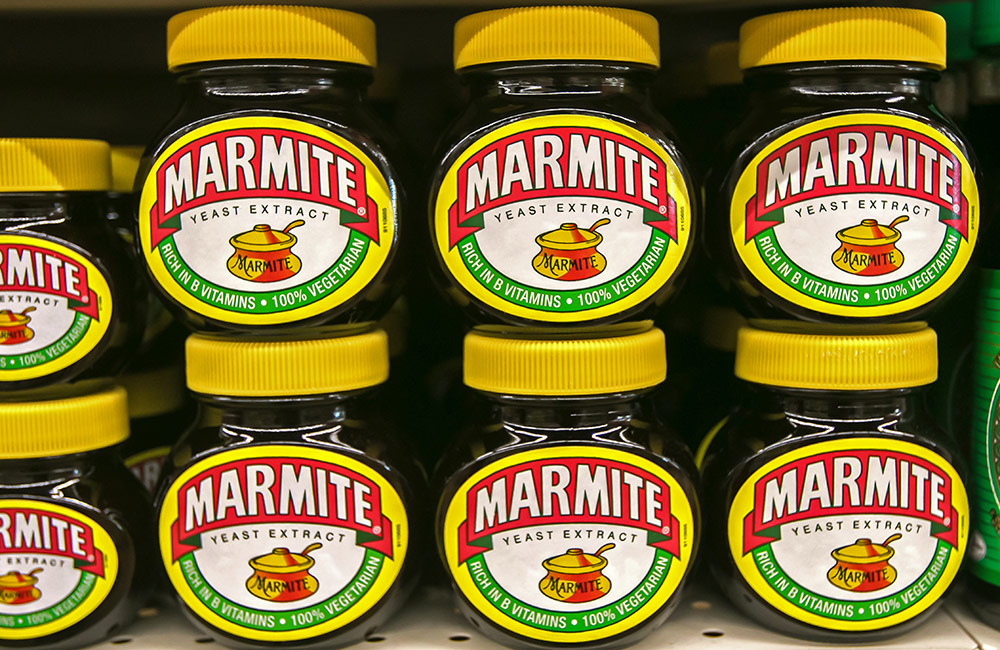
Then, yeast extract rose to popularity. If Bovril embodied strength, Marmite was born from thrift. In 1902, the Marmite Food Extract Company was founded in Burton upon Trent, conveniently close to breweries overflowing with spent yeast. Using Liebig’s principles, they transformed the leftover yeast into a concentrated, savoury spread. Its name came from the French ‘marmite’ – a traditional cooking pot – which originally featured on the label.
Marmite quickly became known as a health food, prized for its B-vitamin content at a time when malnutrition was widespread. During both World Wars, it appeared in soldiers’ rations and hospitals, cementing its reputation as nutritious and practical. By the mid-20th century, Marmite was more than a spread – it was a symbol of British identity. Its now-famous slogan, “Love it or hate it”, embraced the divide that defined it.
Across the world, another nation was busy crafting its own yeast extract legacy. In 1922, Cyril Percy Callister, an Australian chemist working for Fred Walker & Co (later Kraft), set out to create a local alternative after wartime shortages cut off Marmite imports. The result was Vegemite, launched in 1923 after a public naming competition. Early marketing struggled – at one point, they even rebranded as “Parwill” to riff off Marmite’s success (“If Marmite… then Parwill!”).
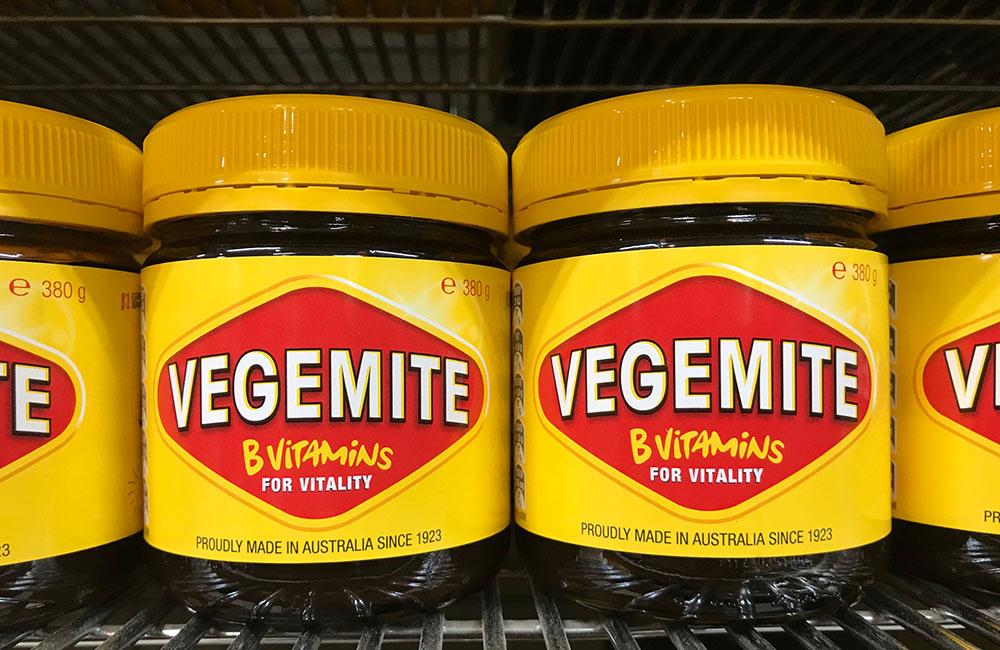
It wasn’t until World War II that Vegemite truly took off, when it was included in Australian soldiers’ rations. With imports still limited, Vegemite became a staple, and by the post-war years, it had found its way into nearly every Australian household. Slightly thicker and saltier than Marmite, it remains a source of national pride and comfort, often eaten with buttered toast or used to add depth to sauces and gravies – like its meaty cousin, Bovril.
More Than Just Toast Toppers
Beyond breakfast, yeast extract spreads have long been secret weapons in the kitchen. A teaspoon can transform soups, gravies and casseroles, acting as a natural flavour enhancer much like soy sauce or miso. Their intense umami quality makes them invaluable to both home cooks and chefs chasing depth without excess salt.
Nutritionally, they’re also powerhouses – naturally rich in B vitamins, folate and, in some versions, fortified with B12, making them particularly popular among vegetarians and vegans. But more than anything, their continued popularity lies in their distinctiveness. No other spread inspires such fierce loyalty or loathing, nor carries such an odd yet endearing history.
A Savoury Legacy
From army camps to breakfast tables, yeast extract has travelled far and wide. Bovril promised strength, Marmite embodied thrift and Vegemite captured a nation’s identity. They were born from necessity, embraced for nutrition and kept alive by nostalgia – proof that even the humblest by-product can become a cultural icon.
Discover the essence of deliciousness and take your cooking from bland to bold with umami.


