

In a world of instant everything, Lance Littlefield and Willem van Schalkwyk are making people wait– and they couldn’t be happier about it. Motherdough, their Cape Winelands bakery group, is built around a single, radical idea: that real bread takes time, and that time is exactly what makes it worth eating. At the heart of their operation is Alfonsina, a sourdough starter born in northern Italy in 1919, whose century-old culture leavens every single product they make. What started in a Franschhoek garage during Covid lockdown has grown into three locations, 42 staff, and a quietly passionate mission to change the way South Africans think about bread. We chat to the duo behind the brand.
Tell us about yourselves and how you got together to make Motherdough a reality?
Lance grew up in South Africa and spent many years living in far-off places – India
among them – and for a long stretch in Italy, where his mother’s side of the family are
from. He got stuck here during Covid, and Motherdough was born. Willem van Schalkwyk grew up in the Free State and worked in jewellery, on cruise ships, in real estate and as a florist – but always dreamed of owning a coffee shop. Together they built exactly that, plus three bakeries.
“Now, we have our own coffee and bakery shops,” Lance says.
We didn’t plan to end up with Motherdough, but the business just evolved and grew
almost as a wonderful creature of its own making.
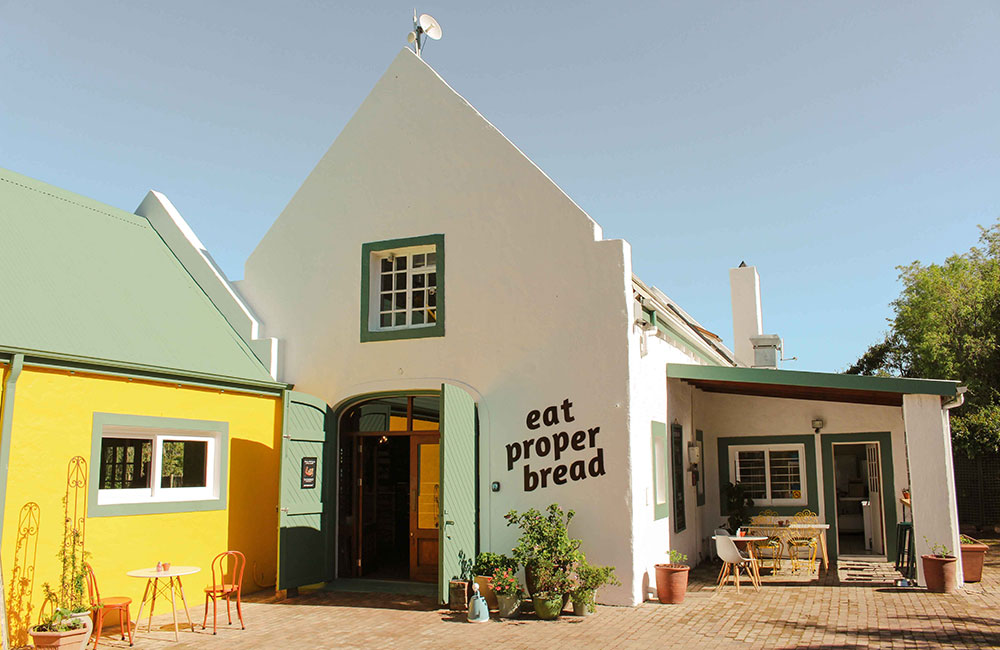
Alfonsina is 106 years old and sits at the heart of everything you do. Beyond being a starter culture, what does she represent to you personally, and how do you protect her integrity as you scale?
Alfonsina was started in 1919 in Clusone, in the Bergamo province of northern Italy.
Lance came to be her custodian after the expansion of French supermarkets with in-store
bakeries placed enormous pressure on Italy’s small family bakeries – many were forced
to close. He knew people whose great-grandfather had founded the bakery that created
her, and so he became keeper of a century-old pasta madre from a distant land. She is named after Alfonsino – a 94-year-old man Lance met in Curino, a village in Biella – “a happy, relaxed, rustic Italian character who made a big impression on me,” says Lance.
The dough, always at work, is named after him. She has been described as “busy 24/7.”
She is cared for daily – wrapped in cloth, kept at a steady cool temperature, fed on a
precise schedule. The team celebrates her birthday every June, a ritual that reflects the
continuity and intention behind their work.
“The mother is the method. If you don’t care for your pasta madre, true sourdough baking simply isn’t possible.”

On protecting integrity at scale: Motherdough uses nothing but Alfonsina to leaven every
single product. No commercial yeast. No shortcuts. We don’t even say we make
sourdough bread – all our breads are real, original sourdough. We say we use natural
fermentation to make proper bread.
You want to retrain how South Africans understand bread. What are the biggest misconceptions people still have about sourdough?
The biggest misconception is that sourdough is a type of bread rather than a process.
When new customers walk in and ask for “a sourdough,” the reply – “all our breads and
pastries are sourdough” – often creates a moment of confusion. People have been
thinking of it as a single product rather than a method that applies to everything from a white loaf to a brownie.

A second major misconception: that sour taste equals sourdough. Real sourdough isn’t
necessarily sour at all – flavour depends on fermentation time, temperature, flour type
and culture health. Perhaps most critically, many people assume a bread labelled “sourdough” in a supermarket has actually gone through a genuine sourdough fermentation. Often it hasn’t. A starter may appear in the ingredients, but the dough is still driven by commercial yeast, accelerated with enzymes and sugars, and preserved to extend shelf life. Fermentation is initiated but not allowed to function as the real driver of the bread. The word is on the label; the process is not in the loaf.
A fourth misconception worth addressing: that proper sourdough is simply “flour, water
and salt.” That framing is useful shorthand when reading a supermarket label – it signals
the absence of additives – but it’s technically incomplete. The living starter is itself an
ingredient, and a critical one. The more accurate standard is that every ingredient in a
proper sourdough must either support or be neutral to the fermentation process.
Nothing should inhibit, accelerate, or replace what the culture does naturally. A short ingredient list doesn’t automatically mean genuine fermentation – some fats, sugars or processing aids could appear in a short list and still impede the starter’s function. The real question is always: does this ingredient work with the biology, or against it?
Real Sourdough vs “Sourfaux” – if a reader walks into a supermarket tomorrow, what are the telltale signs that a loaf is not genuinely naturally fermented?
The real standard isn’t just a short ingredient list – it’s whether every ingredient is
compatible with live fermentation. Proper sourdough contains only things that support or
are neutral to what the starter does: flour, water, salt, and a live culture. Nothing should
inhibit, accelerate, or replace the culture’s natural function.
If you see any of the following on a supermarket loaf, what you’re holding is what Motherdough calls “sourfaux”: made with commercial yeast or “instant yeast” – real sourdough needs no added yeast; the living culture does all the leavening work.
Vitamin C (ascorbic acid) – added to strengthen dough artificially. It also switches off the protease enzymes that make bread more digestible.
Enzymes or “flour improvers” – used to develop structure chemically rather than biologically. Emulsifiers, vegetable oils, or refined fats – stabilisers that substitute for proper fermentation time. Preservatives or antifungal agents – genuine sourdough’s natural acidity provides its own preservation.

“Sourdough flavouring” – if fermentation were real, flavour would emerge from the process itself. As Lance puts it, supermarkets have hijacked the word sourdough for an unfair financial gain. The deeper problem is that many of these additives don’t just appear suspicious on a label – they actively work against the starter. They inhibit the very biological processes that make genuine sourdough lighter, more digestible, and worth eating.
A loaf can have a short ingredient list and still not be proper sourdough if anything in it impedes fermentation. The question to ask isn’t only “what has been added?” but “does anything here stop the culture from doing its work?”

Many customers say they can tolerate your bread when other bread causes discomfort. How do you explain the science of slow fermentation in an accessible way?
Supermarket bread is engineered to work well on a shelf, we bake things that work well in your body. In most commercial bread, yeast is added to produce gas quickly and predictably. Leavening is the goal – fermentation is minimal. Because the process is so fast, other things are added to stabilise the dough and preserve it. The result is bread that looks and holds well, but hasn’t been transformed biologically.
In real sourdough, the rise is just one part of a much longer process driven by wild yeast
and lactic acid bacteria. During proper fermentation, proteins are partially broken down,
some sugars are consumed, acidity develops gradually, and micronutrients become more
accessible. Crucially, protease enzymes break down gluten proteins into amino acids –
which is why many people who believe they are gluten-sensitive find they can eat
properly fermented bread without discomfort.
Motherdough has customers who describe themselves as gluten-sensitive (though not coeliac), elderly customers who had stopped eating bread due to digestive issues, and people managing blood sugar levels – all reporting they tolerate properly fermented
bread far better. Even the Classic White has a naturally low GI, thanks to time – an
invisible ingredient not found on a label.
“I’ve met so many people with gluten sensitivities or IBS who believed bread was no
longer for them. After trying our loaves, they can enjoy it again,” says Lance.

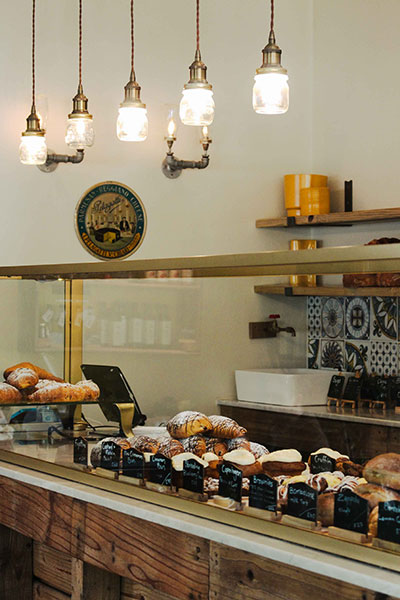
Why do you think people are feeling such a strong emotional return to “proper bread” right now?
Covid was the inflection point. During lockdown, everyone seemed to be trying to make
sourdough, but many had never actually eaten good bread in their lives and didn’t know
what sourdough was. The results were often heavy, impenetrable loaves. Motherdough responded by putting Alfonsina online and distributing around 7,000 pieces of her starter during Level 5 lockdown, creating an online movement of people who needed connection. Each piece came with guidelines – patience, temperature, technique. Thousands of home bakers learned to fold, feed and understand their dough. A community began to rise.

When lockdown ended, that hunger for something real, slow and honest didn’t disappear – it grew. There is also a broader health consciousness at play. Conversations around gut health, honest ingredients and real craftsmanship are gaining momentum. People are reading labels, asking questions, and starting to understand that the cheapest loaf on the shelf may not be the most honest one.
“Bread is alive again. People are asking questions, paying attention, tasting properly. They are finally eating with awareness.” – Willem van Schalkwyk
In a culture built around speed and convenience, do you ever feel pressure to accelerate production – and how do you resist it?
Motherdough started in a garage in Franschhoek with about 100 loaves per week, made
to order. Today they serve approximately 10,000 customers per month across three
locations. Last year they baked 26,000 loaves of bread, 20,000 cornetti and 20,000
bomboloni. The business has scaled significantly – but the process hasn’t changed.
Every product is still leavened solely by Alfonsina. No commercial yeast. No enzymes. No
shortcuts.
Truly committing to 100% natural fermentation – without relying on commercial yeast,
enzymes, or corrective additives – is demanding, slow, and unforgiving. Very few bakeries are prepared to work that way consistently, because it requires discipline, patience, and a willingness to let biology set the pace.

You offer a masterclass to demystify sourdough. Why is this important to you and the Motherdough business?
Education is integral to the mission – not an add-on. Lance has had 1800 particpants
through his teaching kitchen. The masterclasses, held at the Stellenbosch store, are
small, hands-on and practical. Depending on the course, participants learn to make
sourdough breads, slow-fermented pizza bases, authentic Italian fresh pasta, and even
sourdough Indian flatbreads. They leave with baked goods and the skills and confidence
to maintain their own starter at home.
The aim is to demystify natural fermentation – to translate curiosity into understanding
so people can make better food choices over time. Many course attendees are diabetic or
struggle with digestion; they come wanting to learn about healthier options.
There is also a deeper philosophy at work. When Motherdough distributed 7,000
Alfonsina “offspring” during Covid, each new baby came with knowledge – patience,
temperature, technique. That act of sharing was foundational to the brand. The masterclasses continue that commitment: helping people understand what they’re
choosing, through clarity rather than claims. As Lance puts it, “our job isn’t to persuade or instruct, but to act with integrity.”
You describe Jonkershoek as your “agriturismo moment.” What shifted for you philosophically between opening a bakery in town and opening one in nature?
Jonkershoek opened in September 2025 on Arkelshoek Farm in the tranquil Jonkershoek Valley. A small yellow bridge leads to flower-lined paths and a herb and vegetable garden. Guests can sit indoors or outdoors – including at tables among basil, rocket and young tomato vines – for coffee, pastries or a relaxed meal, surrounded by mountains and gravel trails. The setting naturally invites a different pace. It’s less grab-and-go, more linger-and-breathe.
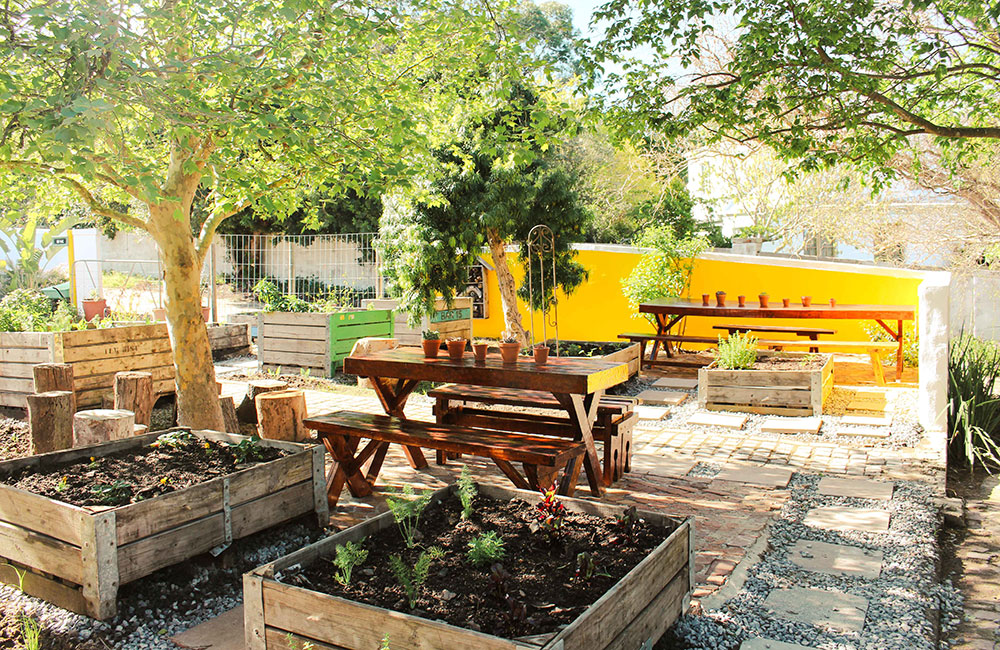
The full Motherdough range is available, along with picnic-style platters featuring local cheeses, Italian meats, Motherdough preserves and fresh bread. Pizza Romana “a mattarello” is proving really popular – thin, light, made on site with Alfonsina-leavened dough and amazing ingredients. The charred edges take a little getting used to but that’s authentic.
You currently have 3 locations. What’s unique about each – and where next?
Franschhoek – Main Rd. This is where it all began. The first physical store opened in
November 2023, and the production bakery is here. It’s the heart of the operation – where Alfonsina does much of her work, and where the full range is produced.
Stellenbosch – Oude Bank Building, Church Street. A popular spot for grab-and-go
breads, panini, and the grilled cheese toasties widely regarded as the best in the Winelands. This is also where the masterclasses are held. Launching in March is an “egg
bar;” finally you’ll be able to have the simple pleasure of egg on toast at Motherdough.
Jonkershoek – Arkelshoek Farm. The newest and most contemplative location, opened
September 2025. An agriturismo experience – mountains, herb garden, outdoor seating,
with have our full offering, with pizza romana as the unique feature.
A fourth presence is also taking shape: the former Val de Vie satellite shop is being
reimagined as a mini-Motherdough in the front bar section of Café del Sol.
Looking further ahead, the team is developing small-batch fermented drinks – naturally
fermented and crafted with the same seasonal care as their doughs – extending the
fermentation philosophy well beyond bread.

Motherdough is more than a bakery – it’s a sustained argument for doing things properly. From distributing 7,000 pieces of Alfonsina during lockdown to teaching 1,800 students the science and patience of natural fermentation, Lance and Willem have built a brand rooted in integrity rather than convenience. Their refusal to use commercial yeast, enzymes, or shortcuts hasn’t slowed their growth – it’s defined it. With a fourth location taking shape and fermented drinks in development, the philosophy that began with a century-old Italian starter shows no sign of being rushed. As their bread proves daily: the best things genuinely do take time.


