

14th June marks Bourbon Day, and if there’s one thing that brings together connoisseurs and casual drinkers, it’s the smooth taste of Bourbon. This American spirit has a rich history, fascinating origin stories and a set of laws that protect its legacy. So, pour yourself a glass, sit back and get a taste of the captivating world of Bourbon.
Every great spirit has its legends, and Bourbon is no exception. The story goes that a Baptist minister named Elijah Craig, hailing from Kentucky, played a crucial role in Bourbon’s birth. Legend has it that Reverend Craig, a distiller by trade, accidentally charred the barrels he used to age his corn whiskey, resulting in a unique and delightful flavour. That being, its exact origins are still a subject of debate among historians. One thing they can all agree on is how it should be made…
Distilling the Spirit
Bourbon starts its journey with a blend of at least 51% corn, giving it a distinct sweetness. The remaining grains typically include rye, barley and sometimes wheat. These grains are milled, cooked and combined with water to create the mash, which is fermented. Yeast is added to the mix; this magical ingredient consumes the sugars, converting them into alcohol.

Once fermentation is complete, the liquid goes through the distillation process. Traditional pot stills or column stills separate the alcohol from the impurities, creating a high-proof spirit. Distillers skilfully manage the process, discarding the ‘heads’ and ‘tails’ of the distillation to ensure only the smoothest and most flavourful ‘heart’ of the Bourbon makes it into the final product.
Bourbon tends to have a rich and robust flavour profile with notes of caramel, vanilla, oak and sometimes a hint of spice.
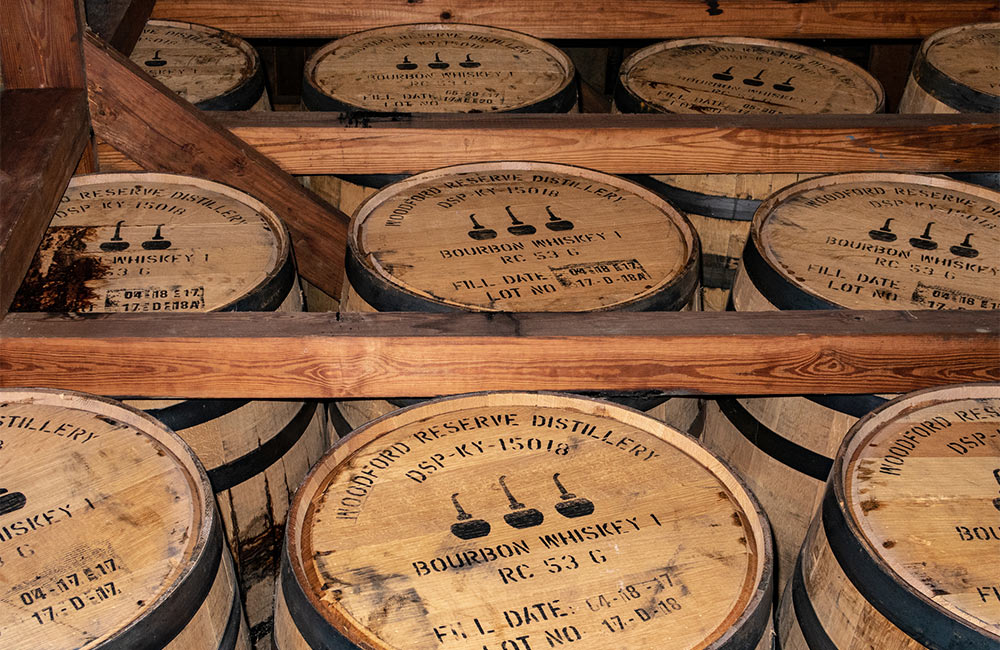
Another defining characteristic is its ageing process in charred oak barrels. These barrels, usually made of American white oak, contribute to the spirit’s flavour, colour and overall character. When the whiskey is placed in the barrels, it begins to interact with the wood, extracting compounds like vanillin, tannins and lignin. This slow dance between the whiskey and the oak gives Bourbon its deep amber hue and imparts those delicious vanilla, caramel and smoky notes we all love.
What makes Bourbon ‘Bourbon’?
To truly appreciate Bourbon, understanding the laws that govern its production is crucial. In 1964, the U.S. Congress declared Bourbon as ‘America’s Native Spirit’, paving the way for regulations that ensure its authenticity. According to these laws, Bourbon must be:
- Made in the United States: Bourbon’s roots run deep in American soil, and the law mandates that it must be produced within the borders of the U.S.
- Aged in new charred oak barrels to achieve its signature flavour profile. The reuse of barrels for production is permissible, but may result in a different classification.
- Distilled to no more than 160 proof: Before entering the barrel for ageing, Bourbon cannot exceed 160 proof (80% alcohol by volume or ABV).
- Bottled at no less than 80 proof: When it comes time to bottle, Bourbon must have a minimum alcohol content of 40% ABV (80 proof).
Whiskey vs. Bourbon – What’s the difference?
Whiskey and Bourbon may seem similar at first glance, but there are distinct characteristics that set them apart. Here’s how they differ…
Bourbon is an American creation and proudly bears the title of ‘America’s Native Spirit’, meaning it can only be produced within the United States – whereas whiskey is a broader category encompassing various styles from different countries, including Scotland, Ireland, Canada and Japan.
The mash bill, or the blend of grains used in the production process, plays a significant role in defining the flavour profile of both spirits. While there are no strict rules regarding the mash bill for whiskey, Bourbon must contain a minimum of 51% corn. This high corn content gives this tipple its characteristic sweetness and smoothness.
In 1964, the U.S. Congress declared Bourbon as ‘America’s Native Spirit’, paving the way for regulations.
When it comes to ageing, Bourbon has specific regulations that set it apart. By law, Bourbon must be aged in new, charred oak barrels. The ageing process adds depth and complexity to the spirit, infusing it with flavours from the wood. Whiskey, on the other hand, is aged in a variety of barrels, including used Bourbon barrels, sherry casks or even wine barrels, allowing for a wider range of flavour profiles.
Bourbon tends to have a rich and robust flavour profile with notes of caramel, vanilla, oak and sometimes a hint of spice. Its sweetness is a result of the high corn content in the mash bill. Whiskey, however, exhibits a broader spectrum of flavours, varying greatly depending on the style and region of production. Scotch whiskey, for example, often showcases smoky and malty characteristics.
Classic Whiskey Sour Recipe
A sophisticated and classic cocktail that showcases Bourbon with a sour twist.

Serves: 2 | Prep time: 2 mins | Make time: 2 mins | Difficulty: easy
Ingredients
100 ml Bourbon
3 Tbsp (45 ml) lemon juice, freshly squeezed
1 Tbsp (15 ml) simple syrup (1:1 ratio water-sugar, boiled)*
1 egg white*
2 maraschino cherries
2 half-moon orange slices
ice cubes
Method
Combine the Bourbon, lemon juice, simple syrup and egg white in a shaker and shake vigorously for 30 seconds without ice (a dry shake), so that the egg white emulsifies. Then add the ice and shake vigorously for another 30 seconds until the drink is chilled correctly and blended.
Strain into a lowball glass filled with ice. Garnish with a maraschino cherry and a slice of orange.
* For a sugar-free version, use erythritol to make a 1:1 ratio sugar syrup.
** For a vegan version, omit the egg. Also, omit the dry shake step, then shake with ice and serve.
Want more? Get to know these seven spirits.


