

If you love drinking coffee but hate the jitters, mesquite coffee is one of the most satisfying alternatives on the market. Made by roasting and grinding the sweet seedpods of the mesquite tree, it brews into a smooth, toasty cup with notes of cocoa, caramel and roasted nuts. It’s naturally caffeine-free, easy on the stomach and has a story that spans centuries – from ancient traditions in the Americas to its surprising place in South Africa today.
Compared to other caffeine-free alternatives, mesquite coffee stands out for its rounded flavour and lack of bitterness.
The Origins of Mesquite
Mesquite trees (Prosopis species) are native to arid and semi-arid parts of the Americas, where they have been part of human diets for thousands of years. Indigenous communities valued them not just for shade and timber, but as an important food source. The ripe pods, high in natural sugars, protein and fibre, were dried, ground into a sweet flour and used in everything from breads and porridges to traditional drinks like atole. In regions where little else would grow, mesquite offered sustenance and stability – a resilient food plant long before ‘superfoods’ were even a thing.
That resilience comes from a remarkable set of adaptations. Mesquite trees send taproots deep into the earth to find water, fix nitrogen in the soil to improve fertility and tolerate intense heat, poor soils and drought. These qualities made them appealing to farmers and settlers, and in the late 1800s, they were introduced to South Africa for shade, windbreaks, firewood and livestock fodder.

The only drawback was that mesquite adapted almost too well. With no natural predators to keep it in check, the trees spread aggressively, especially in semi-arid regions like the Northern Cape and parts of the Karoo. They crowd out native vegetation, compete for scarce water resources and form dense thickets that disrupt grazing lands. Today, certain Prosopis species are recognised as invasive species by the South African National Environmental Management Biodiversity Act, which means their spread must be controlled.
How Is Mesquite Coffee Made?
This is where mesquite coffee offers more than just a tasty drink. Harvesting the pods before they fall to the ground and release their seeds directly helps slow the spread of the trees. It turns an environmental problem into an economic opportunity – creating products that support local communities while reducing the seed bank in invaded areas. Every cup brewed is, in a small but meaningful way, part of a management solution.
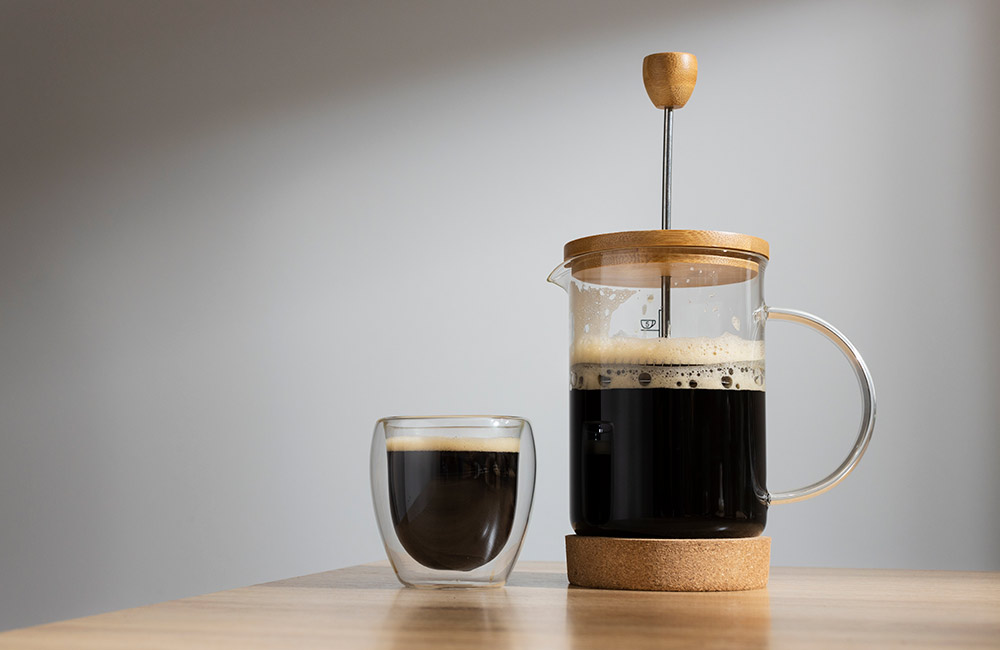
The process of making mesquite coffee is straightforward. Mature pods are collected, cleaned, roasted until aromatic and golden-brown, then ground and brewed in much the same way as coffee. French press, moka pot, filter or cold brew all work. (Here’s how to brew the best coffee at home.) The flavour is mellow, slightly sweet and less acidic than coffee, making it a good choice for anyone who finds regular coffee too harsh.
Why Should You Try It?
Compared to other caffeine-free alternatives – chicory, barley, dandelion root – mesquite coffee stands out for its naturally rounded flavour and lack of bitterness. Many people drink it black, while others blend it with coffee to reduce caffeine without sacrificing flavour. It also pairs beautifully with milk (dairy or plant-based) and spices like cinnamon or cardamom.
Nutritionally, mesquite pods bring a few perks and health benefits to the table. They’re naturally gluten-free, rich in fibre and provide minerals like calcium, magnesium and potassium. They also have a low glycaemic index, meaning they release their natural sugars more slowly than refined sweeteners. While a cup of mesquite coffee won’t deliver the same benefits as mesquite flour in baking, you’re still enjoying a beverage made from a nutrient-rich plant ingredient.
If your mornings could use a little less buzz and a lot more balance, mesquite coffee might be the switch worth making. One sip, and you’ll be wondering why you didn’t try it sooner.
Want to cut down on caffeine? Boost your cuppa with these coffee alternatives.


