
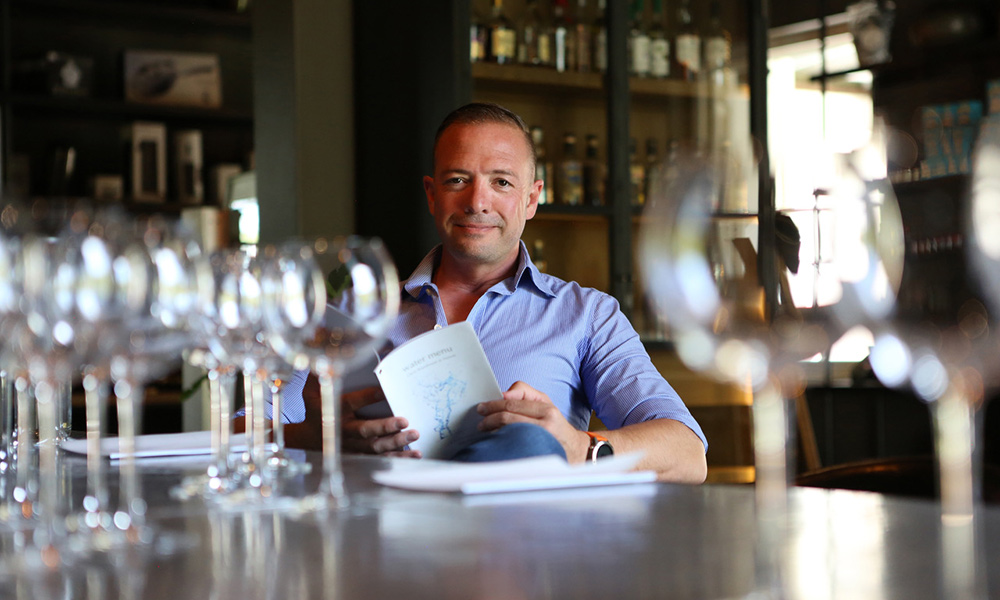
Water is something we drink every day, yet how often do we really stop to taste it? From mineral composition and geology to carbonation, temperature and texture, water can have a surprising influence on what we experience in the glass – and even on the food and wine on our plate, which is why we had a conversation with water sommelier Nico Pieterse.
As one of just two certified water sommeliers in South Africa and among fewer than 100 worldwide, Nico spends his time educating people around the world on the wonders of water. When he’s not busy guiding water tasting sessions, he travels around the world to judge water competitions and co-host the Fine Water Summit. Through The Fine Water Company, which he founded in 2021, he has helped put fine water on the map, curating a collection of rare waters from around the world, some of which have been aged for up to 100,000 years. He now runs the world’s first dedicated fine water tasting room at The Library at Lanzerac Estate in Stellenbosch, where he is challenging our ideas about what water can taste like, where it comes from and what it can bring to the table.
We sat down with Pieterse to discover what makes fine water so fascinating, how to taste it and why understanding its value could change the way we think about this precious resource.

How did you become a water sommelier?
I’ve always been fascinated by hospitality and the way simple things can become extraordinary when you understand them more deeply. Like most people, I grew up believing that water was simply water. It wasn’t until I discovered the world of fine water that I realised every natural water has its own story, shaped by geology, climate and time.
That curiosity led me to become a certified water sommelier, and later, an international water judge. Today, I’m fortunate to travel, judge international fine water competitions and introduce people to a side of water they never knew existed. In 2021, I founded The Fine Water Company. We now operate the world’s first dedicated fine water tasting room at The Library at Lanzerac Estate in Stellenbosch.
What exactly does a water sommelier do?
A Water Sommelier helps people understand, appreciate and pair water, in much the same way a wine sommelier guides guests through wine. We study the origin of water, its mineral composition, mouthfeel, balance and how it interacts with food and other beverages. We also advise restaurants, hotels and producers on water selection and service.
What attracted me to this career was that water is something every single person drinks every day, yet very few people have ever been encouraged to taste it properly. Helping people discover that water has personality is incredibly rewarding.

What are we experiencing when we perceive differences in taste between two waters?
What we’re tasting is dissolved minerals.
As rainwater travels through different layers of rock over hundreds, thousands or even tens of thousands of years, it absorbs minerals such as calcium, magnesium, bicarbonates and silica. Those minerals create flavour, texture and structure.
Some waters are incredibly soft and silky, while others feel crisp, creamy or almost saline. Once people begin paying attention, they are often amazed at how distinctive different waters can be.
How do a water’s source, mineral composition and pH influence its flavour, texture and finish?
The source determines the journey the water has taken, while the geology determines the minerals it acquires along the way.
Calcium often contributes freshness and structure. Magnesium can introduce a slight bitterness. Silica creates a wonderfully silky mouthfeel, while bicarbonates can soften acidity and create roundness.
People often focus on pH, but in reality, mineral composition has a much greater influence on how water tastes. The finish can be clean and refreshing or long and mineral-driven, depending on the balance of those naturally occurring elements.
Is there such a thing as the ‘best’ water, or does it boil down to personal preference?
There isn’t a single ‘best’ water, just as there isn’t a single best wine.
The ideal water depends on the occasion. A delicate still water may be perfect with seafood, while a highly mineralised sparkling water can beautifully accompany richer dishes.
Personal preference also plays a role. Some people enjoy very soft waters, while others prefer bold mineral character. The beauty of fine water is discovering which styles you enjoy most.
When tasting water, what qualities do you assess? Is the vocabulary similar to wine tasting?
There are definitely similarities.
We assess clarity, aroma (although most waters have very little aroma), mouthfeel, texture, balance, minerality, structure and finish.
Water also has descriptors such as silky, creamy, crisp, round, lively or chalky.
Unlike wine, however, water is about subtlety. The differences are delicate, but once you learn what to look for, they become surprisingly easy to recognise.
Can you identify a water’s origin in a blind tasting? Which characteristics provide hints?
Sometimes, but never with absolute certainty.
A glacier water is often exceptionally soft because it has had limited contact with rock. Artesian waters can display deeper mineral complexity, while volcanic regions often produce waters with unique mineral signatures.
A trained palate can usually identify the style of a water and make an educated assessment of its origin, but nature always has exceptions. That’s part of what makes fine water so fascinating.

How does carbonation impact taste? Why do some sparkling waters have soft or harsh bubbles?
Carbonation changes both texture and flavour perception.
Fine, naturally integrated bubbles create elegance and creaminess, while larger bubbles feel more energetic and aggressive.
The level of carbonation, whether it’s naturally occurring or added, together with the mineral composition, determines how sparkling water feels in the mouth.
It’s similar to Champagne. The quality of the bubbles contributes enormously to the overall experience. (Learn everything you need to know about Champagne.)
However, CO2 is acidic, so once carbonated, the water becomes about two pH levels more acidic than its still version. For this reason, I don’t like pairing sparkling water with a heavy red wine, as the acidity breaks the wine down and gives it an unpleasant taste profile.
What makes a good water and food pairing, and can the wrong water overpower a dish or wine?
Absolutely! Water is often the forgotten ingredient at the table, yet it can dramatically influence how food and wine taste.
A highly mineralised sparkling water may overpower delicate oysters or sashimi, while an exceptionally ‘soft’ water can become lost alongside a rich steak.
The goal is harmony. The right water refreshes the palate, enhances flavours and prepares you for the next bite without competing with the food.
How important are serving temperature and glassware to the overall tasting experience?
They make a remarkable difference.
Serving water too cold masks flavour, just as serving red wine too warm changes its character. I love serving water between 14 and 18 degrees Celsius. If it’s too cold, it will just numb the palate, and the taste will not be experienced. There is nothing wrong with drinking an ice-cold glass of water for refreshment; the emphasis will, however, be on refreshment and not on taste.
Glassware also matters. A proper tasting glass allows you to appreciate texture and subtle aromas, while careful pouring helps preserve the character of sparkling waters.
These small details elevate water from something we simply drink to something we truly experience. (Discover how different types of glasses change the taste of wine.)
What distinguishes South African natural/fine waters from their international counterparts?
South Africa produces some exceptional natural waters, many of which reflect the country’s remarkable geological diversity. Our waters often display excellent balance and purity, and they compare extremely well with internationally recognised fine waters.
What excites me most is that South Africa has the potential to become far better known for its fine waters. We already produce world-class wines, and I believe our natural waters deserve the same recognition on the international stage.
In South Africa, our sources don’t have a lot of minerals, purely as part of the geology, so our waters have a very low TDS or total dissolved solids. The water brand with the highest TDS in South Africa is Mountain Falls, with a TDS of 345mg/L, where the highest TDS available in the world is around 30,000mg/L.
How do you reconcile the appreciation of fine water with concerns of sustainability, accessibility and responsible consumption?
It’s an important conversation, and one I welcome. Fine water isn’t about encouraging people to consume more water; it’s about encouraging people to appreciate water more thoughtfully.
Responsible producers invest heavily in protecting the natural sources they depend on because their business exists only if those ecosystems remain healthy. At the same time, we should never lose sight of the importance of safe drinking water for everyone.
Appreciating fine water and supporting water conservation are not opposing ideas. In fact, I believe that understanding water’s value makes people more conscious of protecting it.
In my opinion, water must have a monetary value because, as humans, for some reason, anything we receive for free we will waste, and that’s the last thing we want to do with our most precious resource.
If someone wanted to try water tasting at home, what would you suggest as a starting point?
Buy three different bottled waters with noticeably different mineral compositions.
Pour them into identical glasses at the same temperature and taste them side by side without looking at the labels.
Take small sips and pay attention to the texture, the weight on your palate and how long the taste lingers after swallowing.
Most people are genuinely surprised to discover that they can immediately recognise differences. It’s a wonderful reminder that our senses notice far more than we often realise. Take that further and pour a nice glass of wine and then taste the wine after having a sip of each of the waters!
What can guests expect from a fine water tasting experience at Lanzerac Estate?
Fine water tasting at The Library at Lanzerac Estate is unlike anything most people have experienced.
Over the course of an hour, guests taste six carefully selected fine waters from around the world: three still and three sparkling, while learning how geology, mineral composition and age influence flavour and texture. We also explore how different waters pair with food, wine and other beverages, often challenging long-held assumptions about what water can contribute to the dining experience.
The experience is educational, interactive and surprisingly entertaining. There are always moments of surprise as guests realise that water is every bit as diverse and fascinating as wine.
My hope is that people leave with something much more valuable than a favourite water. It’s educational, eye-opening and inspirational. I deliver a message that I want everyone on Earth to hear, and that message is all about the appreciation of water – its taste, value, importance and scarcity. I hope they leave with a new appreciation for one of the world’s most precious natural resources.

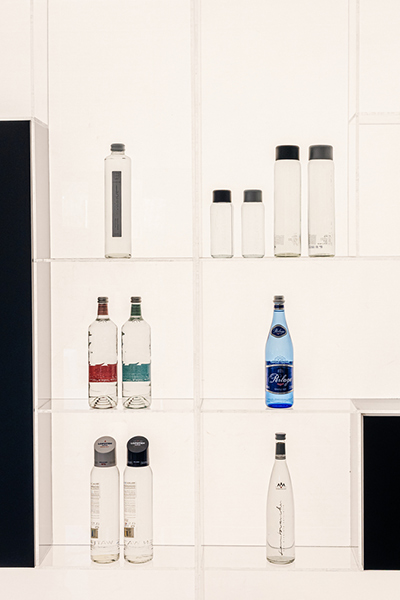
Guests can taste six waters (three still and three sparkling waters) during a 45-minute session at R 350 per person. The experience is available daily at The Library, Lanzerac Wine Estate, Stellenbosch, Monday-Friday from 09h30–19h30 and Saturday and Sunday from 09h30–15h45. To book your Fine Water Tasting experience via Dineplan, click here.
To experience water tasting, book accommodation and explore local sights, visit Stellenbosch.
Explore the links below for more information.


