

Every spring, the Klein Karoo valleys outside Montagu burst into a haze of pink and white almond blossoms. It’s here that Italian immigrant Rino Brochetto planted South Africa’s first commercial almond trees back in 1974, unknowingly sowing the seeds for a family legacy. Five decades later and his granddaughter, Réni le Roux, founder of The Almond Girl, is carrying it forward – growing and selling the very almonds she’s ironically slightly allergic to.
From her family’s farm, Amanteco Almonds, Réni is shelling out the good stuff: small-batch, single-origin almonds grown, cracked, roasted and packed on-site. Her range is wholesome and indulgent, from sweet to savoury snacks. We chat with Réni about harvest season, why local is better and the peaks and pits of running a buzzing brand.
Your grandfather planted SA’s first commercial almond trees in 1974. What do you think he would say if he could see the farm today?
I think he’d be proud to see how his vision has taken root – quite literally! What started as a small, pioneering experiment in the Klein Karoo has grown into a thriving business that still carries his same values: hard work, resilience and respect for the land.
I must also give credit to my father – without his financial support, we would not have grown so quickly to establish ourselves as the pioneers of almond farming in South Africa. My brother Stephan manages the farm operations and does all the planning in terms of the farm and production. Both Stephan and I handle local and export orders. With The Almond Girl, I also have their full backing in following my dream. It is very much a family affair, with my mother, Angela, being our matriarch.


Most almonds on South African shelves are imported. Why is local better?
Local almonds aren’t just fresher – they taste better and are better for the planet. Supporting local means supporting farmers, reducing food kilometres and enjoying nuts that truly reflect the unique character of the Klein Karoo. I always tell people to taste the difference, and every time, they confirm that there is a difference. Most people also don’t know there are varieties of almonds, which I try to educate consumers about. We have about 14 varieties of almonds – all have their own use, from snacking to baking to using them for almond milk.
How do you love to enjoy your almonds?
Fun fact – I am slightly allergic to almonds, but not majorly. When I do indulge, I go for the savoury flavour. I am very excited to incorporate more value-added flavours to the range in the future – flavours that pair nicely with wine on your stoep at sunset. Almonds are such a focal point of our lives, and we really would like to grow the South African almond industry and become internationally recognised.
How do you balance health, flavour and fun when developing new products?
It’s all about high-quality products and exceptional taste. I tend to roast and coat in small batches to ensure that freshness is preserved. I always try an almond-related product in-store to see what the market is doing. The market is very niche, and I do not want it to become saturated with too many products, so I would rather have fewer products, but with the best taste.
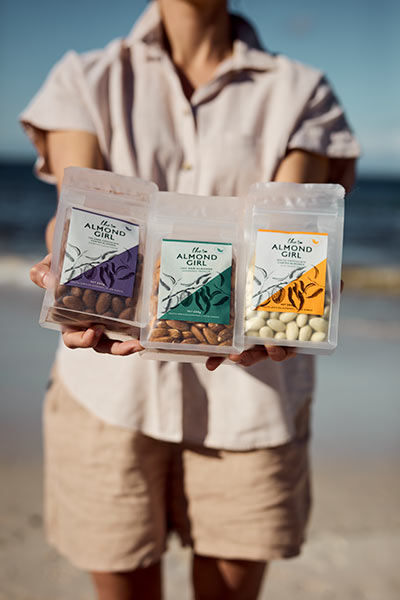

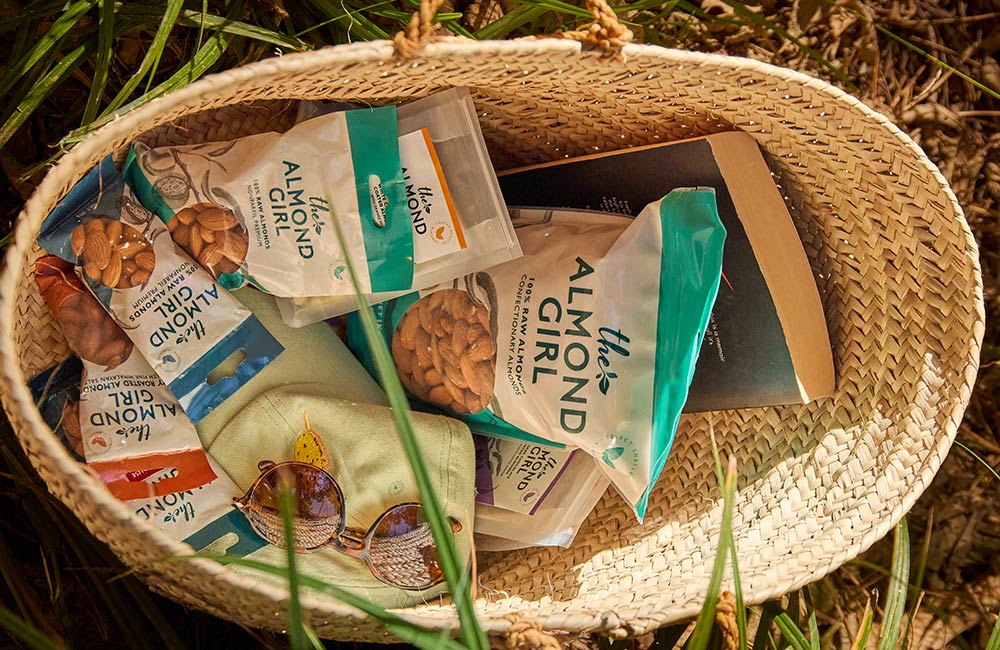


How does the Klein Karoo terroir shape the flavour and spirit of your almonds?
The Klein Karoo is a land of contrasts – arid landscapes that bloom in bursts, crisp winters and sun-soaked summers. With that comes a lot of patience to ensure we produce the highest quality almonds. When you look after your trees, they will look after you.
Spring in the Klein Karoo sounds like a dream! What’s harvest season like on the farm?
In the middle of nowhere (where we are based), the Klein Karoo can feel vast and quiet – until spring, when our almond trees burst into white blossoms. It is a sensory overload, from the buzz of the bees to the smell of the blossoms to the visual representation of the orchards. It is always a special time on the farm, as we can then look forward to the harvesting season.


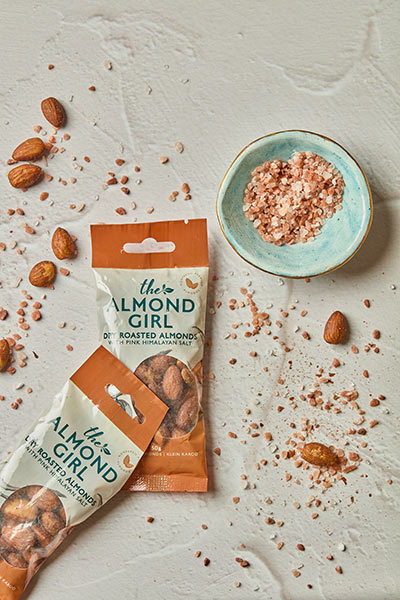
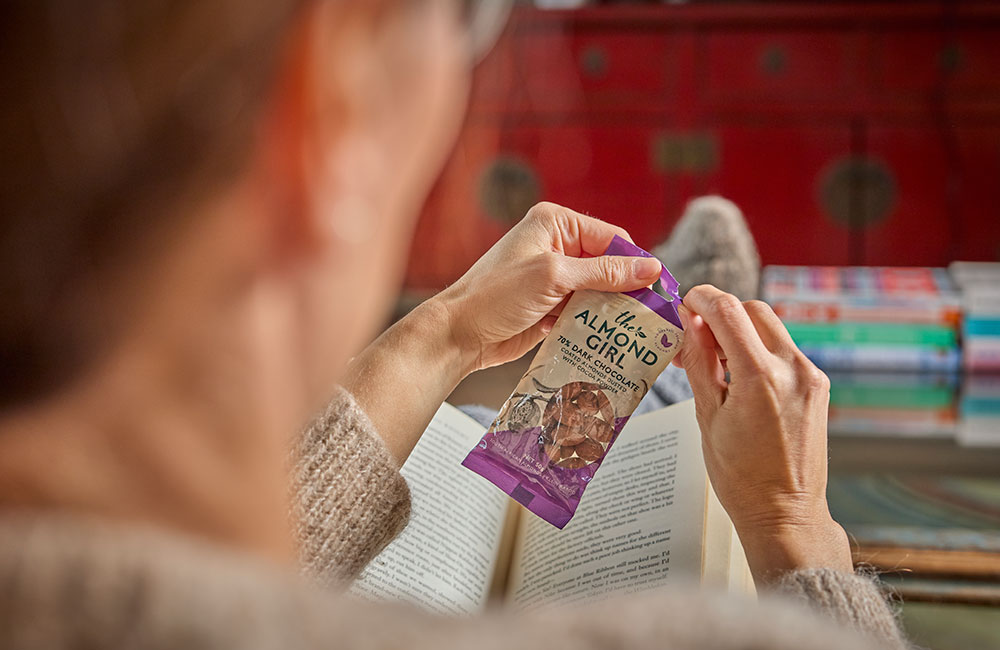
How does the brand prioritise quality and keep that artisanal feel as it continues to grow?
The Almond Girl is still very much a one-woman show. While I have a small team on the farm helping with packing and quality control, all the key decisions, from product development to brand direction, are made by me. I manage our social media, personally reply to every enquiry and carefully select the stores where I want our almonds to be stocked. This hands-on approach keeps the brand personal and true to its roots.
What have been some of your proudest moments and biggest lessons running a family business?
My brother and I work very closely together, and we have to balance personal and work challenges quite often. But at the end of the day, we have each other’s backs, and I wouldn’t want to do it with anyone else. Every time I bring out a new product or flavour, I am proud that I had the courage to commit and live my dream. I have learned to have more patience and not jump ahead when I get excited about something. I am also proud that we can supply directly to the end consumer and that we can cut out the middleman, so the consumer can buy online, directly from us.

What made you decide to turn your family’s legacy into a brand?
Turning my family’s legacy into a brand felt like a natural next step – a way to share the story, the flavour and the values behind our almonds with more people. I believe a brand is a promise kept and that is what I would like the consumer to know. Single-origin almonds from one source.
You talk about bringing food closer to the source. What does that mean to you?
Bringing food closer to the source means staying connected to every step of food production – from tree to table. For me, it’s about care, transparency and making sure every almond reflects the land, the season and the people who nurture it. Know your farmer and know that you can trust your farmer.

Want a taste? Find The Almond Girl at your nearest stockist or shop products online.
For more information, visit the website below and follow The Almond Girl on socials.


