
When it comes to enjoying a good drink, South Africans know how to do it right – a packed sports bar on rugby day says it all. From classic combos like Brandy & Coke and Springbokkies to traditional spirits like Witblits and Mampoer, get a taste of these unique South African drinks.
Amarula

No list of South African drinks would be complete without a nod to Amarula.
We recommend having it with a bit of vanilla ice cream.
This creamy liqueur is made from the exotic marula fruit and has earned a global reputation for its rich, velvety taste. With hints of caramel, vanilla, and the essence of the marula fruit, Amarula is a true taste of South Africa. It’s delightful on the rocks, or served in coffee, but if you really want to be indulgent, we recommend having it with a bit of vanilla ice cream.
Brandy & Coke

Ah, Brandy & Coke. This classic combination of brandy and fizzy Cola has been a go-to South African drink for decades. It’s a simple yet perfect marriage of flavours, often enjoyed at braais and bars across the nation. Having a number of brandy-producing regions, it makes sense.
In the early 20th century, KWV played a major role in shaping the South African brandy industry.
Brandy production in South Africa began around the late 17th century, with the establishment of vineyards and distilleries by European settlers. The Cape Winelands region, known for its fertile soil and Mediterranean climate, became the heart of South African brandy production. In the early 20th century, the Koöperatieve Wijnbouwers Vereniging van Zuid-Afrika (KWV), played a major role in shaping the South African brandy industry. KWV implemented quality control measures that helped elevate the standard of local brandy. They also established the basis for the use of the term ‘pot still brandy.’ Read all about the history of KWV.
Mampoer
Mampoer has a high alcohol content, sometimes reaching up to 80 percent! The term ‘mampoer’ is believed to be derived from the word ‘maagpyn,’ meaning ‘stomach pain’ – a true testament to its potency. What sets mampoer apart is its production process; it’s made in small batches and is known for its raw and unrefined character. The use of pot stills, which are less efficient than modern continuous stills, is a key feature of mampoer production.
The term ‘mampoer’ is believed to be derived from the word ‘maagpyn,’ meaning ‘stomach pain’ – a testament to its potency.
This fiery liquid is traditionally made by fermenting and distilling various fruits – peaches being a popular choice; other fruits like apricots, plums and figs can also be used. Many locals view mampoer as a symbol of their cultural heritage. In recent years, the South African government has implemented regulations to control the production and sale of mampoer, primarily for safety and quality control reasons. This includes setting limits on its alcohol content to ensure it is not excessively potent.
Springbokkies

When South Africans are feeling patriotic, they turn to Springbokkies. This layered drink consists of equal parts crème de menthe or peppermint liqueur and Amarula cream liqueur. Downed in a single gulp, it’s sure to put some spring in your step.
The shot’s green layer represents the Springboks’ jersey, while the creamy layer symbolises unity.
It’s believed that Springbokkies were invented during the 1995 Rugby World Cup, which South Africa hosted and won. The shot’s green layer represents the Springboks’ jersey, while the creamy layer symbolises unity, as Amarula is made from the marula fruit, also known as the ‘marriage fruit.’ Needless to say, this spirited shot is a favourite amongst rugby fans. Go Bokke!
Tant’ Sannie se Melktert
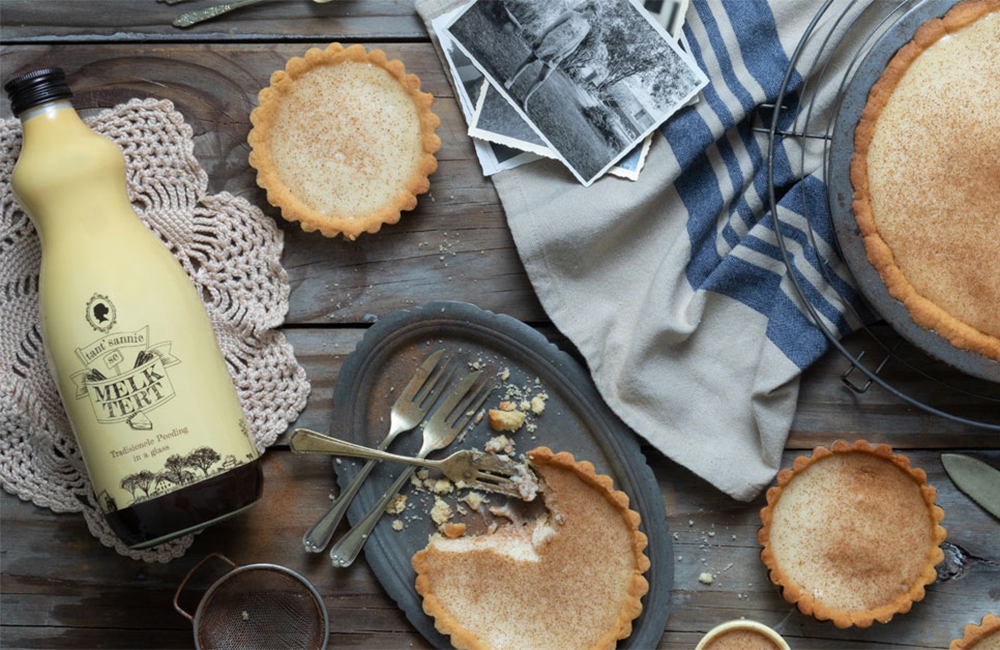
Milk tart or ‘melktert’ is arguably the quintessential South African dessert. The comforting flavours of warm cinnamon spice and the creamy, velvety texture is undeniably delicious – so much so, that Tant’ Sannie has bottled it for all to taste.
This drink has been distilled to perfection and filled with everything you love about milk tart.
Tant’ Sannie se Melktert is a cream liqueur infused with the flavours of milk tart – so you have your dessert and drink it! This drink has been distilled to perfection and filled with everything you love about milk tart. A classic blend of nostalgic flavours, it’s ideal for drinking at special occasions, or infused into beverages and desserts. Read all about the origins of milk tart and get baking inspiration.
Umqombothi

Umqombothi holds a special place in the hearts and homes of locals, especially among the Zulu and Xhosa communities. It is primarily made from indigenous African grains like maize, sorghum or millet. The grains are soaked in water, allowing the starches to convert into sugars; they are then dried and ground into a coarse powder, forming the base of the beer. The ground grains are mixed with water and left to ferment.
Umqombothi is commonly consumed during milestone events such as weddings, funerals and coming-of-age ceremonies.
This traditional drink is often enjoyed communally and served in a shared container or calabash. Umqombothi is commonly consumed during milestone events such as weddings, funerals and coming-of-age ceremonies (umgidis). Many South Africans view umqombothi as a cultural symbol and a connection to their ancestors who first fermented it centuries ago.
Witblits

Witblits, or ‘white lightning’ is a colourless liquor known for its formidable strength. It’s also sometimes called ‘firewater’ due to its high alcohol content, which typically exceeds 60% alcohol by volume. Witblits embodies the rugged spirit of the Karoo; it was often used for medicinal purposes, as well as for celebrating special occasions and social gatherings.
Traditionally, witblits was produced in small, homemade stills, contributing to its reputation for being a ‘backyard’ spirit.
This local drink is typically made from grapes, similar to brandy – but unlike brandy, which is aged in wooden barrels, witblits is distilled to be as pure and unadulterated as possible, resulting in a high-proof spirit. Traditionally, witblits was produced in small, homemade stills, contributing to its reputation for being a ‘backyard’ spirit. This artisanal approach allowed for variations in flavour and strength, making each batch somewhat unique.
Want more? Get to know these alcohol spirits.


