
The New York State Gaming Commission on Monday issued licenses for three resort casinos in the New York metropolitan area. The meeting was held in a riverside park in Upper Manhattan, and the decision itself marked a new chapter for the city’s entertainment industry.
Three sites far from Manhattan
While Atlantic City is trying to move away from its image as a gambling city and attract beer enthusiasts, New York wants to be associated with casinos. None of the future gaming complexes will be located in the city’s main tourist hub. All three sites are on the outskirts: a parking lot near the New York Mets’ Citi Field in Queens, the Ferry Point golf course in the Bronx, and the Aqueduct Racetrack, located near JFK Airport, also in Queens. For New York, this is the first time it will have full-scale casino resorts with table games, hotels, and entertainment infrastructure.
Strict conditions for the winners
The licenses were not approved unconditionally. The commission required each company to appoint an independent external monitor who will report regularly to the regulator. Oversight will cover financial and legal obligations, as well as delivering on promised investments in local communities. Commission Chair Brian O’Dwyer, addressing project representatives, said the state is counting on meaningful job creation, improved infrastructure, and an influx of gaming revenue.
Governor Kathy Hochul, in turn, emphasized that the projects will channel billions of dollars into the transportation system and education, and will also create tens of thousands of jobs.
What will be built—and at what cost
The three projects differ in scale and budget, but follow a common formula: a casino plus supporting infrastructure.
- Queens, Citi Field (Steve Cohen and Hard Rock). Budget: $8.1 billion. A casino complex with a hotel, a concert venue, and retail space will be built on the parking lot near the stadium.
- Bronx, Ferry Point (Bally’s). About $4 billion. The plan calls for building a casino, a hotel, an events center, conference rooms, and restaurants.
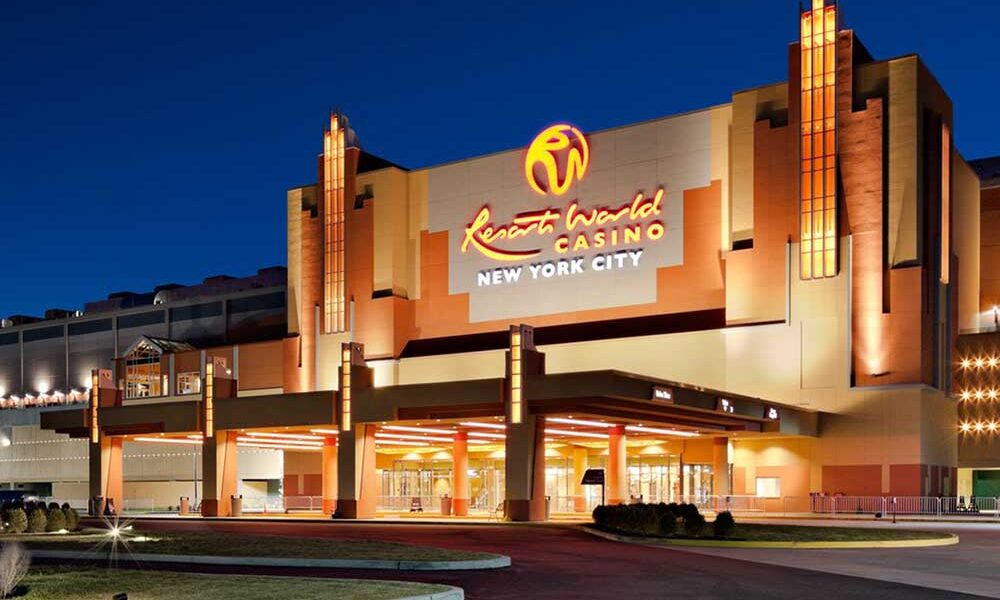
- Queens, Aqueduct Race Track (Resorts World). Investment of more than $5 billion. An existing slots-only facility will be expanded into a full-scale casino with a hotel, restaurants, and entertainment areas.
This approach reflects a global trend in which casinos are no longer just places to gamble and instead offer a comprehensive, high-quality leisure experience. This is largely due to the fact that today you can simply play slots or roulette without even visiting a casino—just go to an online casino. The market features many large platforms that offer thousands of different gambling entertainment, as well as sports betting within the same platform. We learned this after studying several biggest betting sites at the top of search results It turns out that they not only take sports bets but also let users play casino games. Gaming platforms with international licenses are available in different countries, from the U.S. to Rwanda, which makes them especially convenient. As a result, to compete with the online segment, land-based casinos have to offer a full range of entertainment.
Protests and the prospect of lawsuits
The commission’s decision was not without controversy. A group of opponents of Cohen’s project near Citi Field interrupted the meeting with shouts and promised to continue the fight in court. “You chose a billionaire, not New York residents! Shame!” the protesters chanted as they left the room. Critics are convinced that casinos will worsen problem gambling.
Who lost out in the race for licenses
Competition was intense. Local councils rejected three Manhattan projects, including a Caesars Palace in Times Square backed by rapper Jay-Z. The proposal for a casino resort on the iconic Coney Island boardwalk in Brooklyn also fell through. MGM unexpectedly dropped out of the race altogether, even though it had the support of the local community.
Why the decision seemed like a foregone conclusion
The authority to issue up to three licenses in the New York metropolitan area was created after a 2013 referendum that paved the way for legalizing casinos across the state. Four full-scale casinos are currently operating in the northern part of the state, along with nine gaming halls without live table games.
By the time of the final vote, exactly three bids remained in the competition, and the relevant panel, the Gaming Facility Location Board, had previously already recommended approving all three. Future gaming revenue is already factored into the state budget, so the commission’s outcome was widely seen as a formality.
The budget outlook
Consultants to the Location Board offered a conservative estimate: the three casinos will generate about $7 billion in gaming taxes from 2027 to 2036. Added to that are $1.5 billion in licensing fees and nearly $6 billion in state and local taxes.
An unexpected beneficiary—Trump
One of the sites turned out to be linked to the former and current president. When Bally’s in 2023 purchased management rights from the Trump Organization for the city-owned Ferry Point golf course, the deal included a bonus clause: an additional payment of $115 million if a casino license is secured. Now that condition is taking effect. Representatives of the Trump Organization did not respond to a request for comment.


